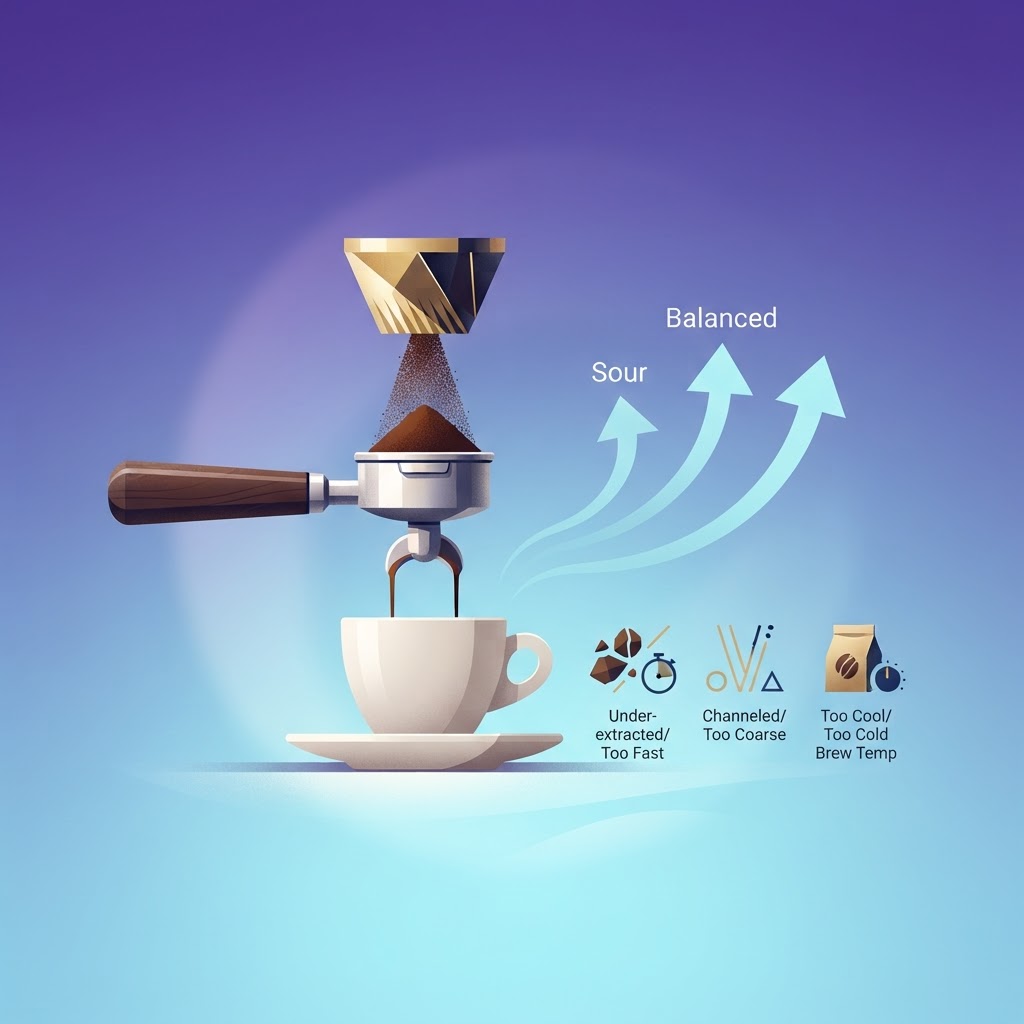
Why Your Espresso Tastes Sour (And How to Fix It)
Unlock the secret to delicious home espresso! Discover why your shots taste sour and learn practical fixes for a perfect brew every time.
So, you’ve finally invested in your dream home espresso machine, picturing rich, velvety shots that rival your favorite cafe. But then it happens: your first few attempts result in a shot that’s… well, sour. That puckering sensation, the sharp, acidic bite – it’s a common frustration for many embarking on their home espresso journey. But fear not! A sour espresso isn't a death sentence for your coffee dreams. It’s a clear signal that something in your brewing process needs adjustment. Let's dive deep into why your espresso tastes sour and, more importantly, how to fix it, transforming your home espresso experience from disappointing to divine.
This guide is designed for anyone stepping into the world of home espresso, aiming to demystify the common pitfalls and equip you with the knowledge to achieve consistently delicious results. We’ll cover the key factors influencing taste and provide actionable steps you can take today.
Key Takeaways
- Sourness = Under-extraction: The primary culprit is invariably under-extraction, meaning water passed through the coffee grounds too quickly or not long enough.
- Grind Size is King: Finer grinds increase resistance, slowing water flow and promoting better extraction.
- Dose Matters: The amount of coffee grounds affects density and resistance.
- Tamping Technique: Consistent, level pressure is crucial for even water flow.
- Water Temperature: Too low a temperature can lead to under-extraction.
- Brew Time is a Symptom: While important, brew time is often a result of other variables like grind size and pressure.
Understanding Espresso Extraction
Before we tackle the sourness, let's understand what extraction is. When you pull an espresso shot, hot water is forced through finely ground coffee under high pressure (typically around 9 bars). This process dissolves soluble compounds from the coffee grounds into the water, creating the complex flavors we love in espresso.
There are three main stages of extraction:
- Under-extraction: This happens when the water passes through the coffee too quickly or doesn't dissolve enough of the desirable compounds. This results in a thin body, weak aroma, and a predominantly sour, acidic taste. Think of biting into a lemon before it's ripe.
- Ideal Extraction: This is the sweet spot where a balanced range of solubles are dissolved, creating a rich, full-bodied espresso with a harmonious blend of sweetness, acidity, and bitterness. You'll taste sweetness, fruitiness, and a pleasant complexity.
- Over-extraction: This occurs when the water dissolves too many compounds, including the less desirable, bitter ones. Over-extracted espresso is often thick, dark, and has a harsh, bitter, or burnt taste. Imagine burnt toast.
Sourness is a clear indicator of under-extraction. So, why is your espresso under-extracted?
The Usual Suspects: Why Your Espresso Tastes Sour
Several factors can contribute to under-extraction and that unwelcome sour taste. Let's break them down:
1. Grind Size: The Most Crucial Variable
This is, by far, the most common reason for sour espresso. The grind size dictates how much surface area is exposed to the water and how quickly the water can flow through the coffee bed.
- Too Coarse: If your coffee grounds are too coarse (like for a French press), water will rush through them almost unimpeded. It won't have enough contact time or surface area to dissolve the necessary compounds, leading to under-extraction and sourness. Espresso requires a very fine grind, often compared to granulated sugar or even finer, depending on your beans and machine.
- Too Fine: Conversely, a grind that's too fine can create too much resistance. Water may struggle to pass through, leading to channeling (uneven water flow) or over-extraction, resulting in bitterness. However, for sourness, we're usually looking at too coarse.
Fix: Your primary focus should be on adjusting your grinder. You need a grinder capable of producing a fine, consistent grind suitable for espresso. If your current grinder can't go fine enough or produces an inconsistent grind (a mix of fine dust and large chunks), it might be time for an upgrade.
- Action: Start by grinding slightly finer. If your espresso shot runs too fast (e.g., less than 20 seconds for a double shot) and tastes sour, make your grind finer. Make small adjustments – a quarter or half turn on your grinder’s adjustment ring can make a big difference.
2. Coffee Dose: The Amount of Grounds
Your coffee dose refers to the weight of ground coffee you use in your portafilter. The dose influences the puck's density and how water flows through it.
- Too Little Coffee: Using too small a dose for your basket size can leave too much space, allowing water to channel or pass through too quickly without sufficient contact time. This contributes to under-extraction.
- Too Much Coffee: If you overfill your basket, it can create excessive resistance, potentially leading to channeling or even over-extraction if the water is forced through unevenly.
Fix: Be consistent with your dose. Use a scale to weigh your whole beans before grinding or your grounds after grinding.
- Action: Ensure your dose is appropriate for your portafilter basket size. For a typical double basket, doses often range from 16-20 grams. If your shots are running fast and tasting sour, try slightly increasing your dose (by 0.5-1 gram) while maintaining an even distribution and tamping.
3. Tamping Pressure and Consistency
Tamping is the act of compressing the coffee grounds in the portafilter to create a dense, level