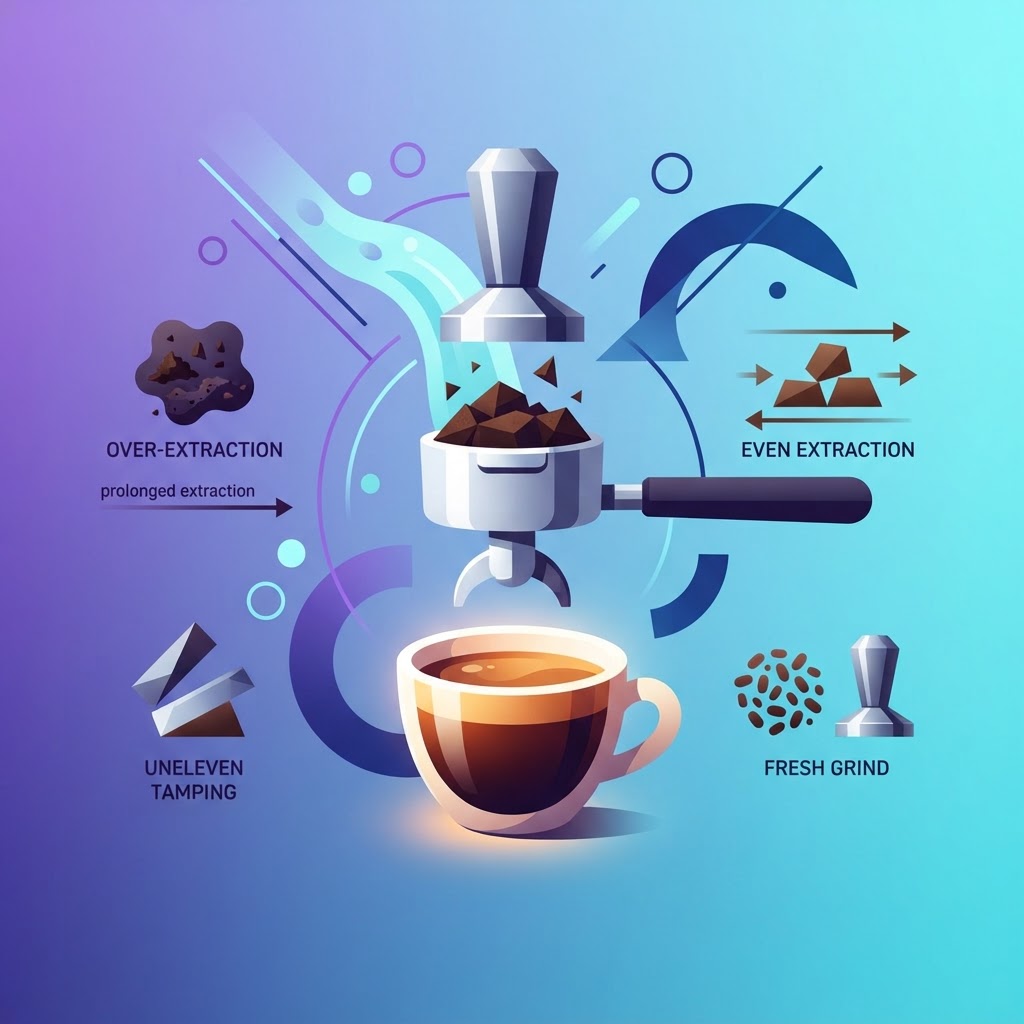
Why Your Espresso Tastes Bitter (And How to Fix It): A Guide to Perfect Home Espresso
Struggling with bitter shots? Learn the science behind extraction and master the art of pulling perfect home espresso every time.
Key Takeaways
- Bitterness is usually over-extraction: It means water pulled too many tannins and compounds from the grounds.
- Adjust your grind: Finer grinds increase resistance; coarser grinds decrease it.
- Temperature matters: Water that is too hot burns the coffee compounds.
- Cleanliness is non-negotiable: Old coffee oils create rancid, bitter flavors.
The Quest for the Perfect Shot
If you have recently invested in your first machine, you are likely discovering that brewing delicious home espresso is equal parts art and science. Nothing is more disappointing than anticipating a rich, syrupy shot only to be met with a harsh, tongue-curling bitterness. If your espresso tastes like burnt toast or dark chocolate gone wrong, you aren't doing something 'wrong'—you are simply over-extracting your coffee.
Understanding Extraction: The Science of Bitterness
To fix the flavor, we must understand the chemistry. According to the Specialty Coffee Association, extraction refers to the process of dissolving soluble compounds from coffee grounds into water. Acids and sugars extract first, followed by the heavier, bitter compounds that provide depth when balanced correctly, but become overwhelming when pulled too far.
Why Your Home Espresso Tastes Bitter
- The Grind is Too Fine: A fine grind creates more surface area for water to interact with. If the resistance is too high, the water stays in contact with the coffee for too long, leaching out excess bitterness.
- Over-dosing the Basket: If you cram too much coffee into the portafilter, the water may channel unevenly, leading to localized over-extraction.
- Water Temperature: Most home espresso machines operate between 195°F and 205°F. If your machine runs too hot, it will scorch the coffee grounds.
Troubleshooting Your Technique
When you start your journey into home espresso, consistency is your best friend. In the world of digital marketing, we often talk about 'data-driven decisions' at WebSpikes, and the same applies to your kitchen. Tracking your variables is the only way to repeat a success.
The Espresso Dial-In Table
| Variable | To Reduce Bitterness | | :--- | :--- | | Grind Size | Adjust coarser | | Brew Ratio | Decrease the yield | | Brew Time | Aim for 25-30 seconds | | Water Temp | Lower by 2-3 degrees |
Step-by-Step Fixes
1. Adjust Your Grind Size
The most common culprit is a grind that is too fine. If your shot is dripping slowly (taking over 35 seconds), your coffee is likely over-extracted. Shift your grinder settings toward the 'coarse' side in small increments.
2. Check Your Ratio
A standard brew ratio is 1:2. If you use 18g of coffee, try to aim for 36g of liquid espresso. If you are pushing 50g or 60g, you are likely pulling too much water through the puck, resulting in bitter tea-like notes.
3. Maintain Your Gear
Coffee oils go rancid quickly. A clean machine is essential for great home espresso. Ensure you are backflushing your group head regularly, as build-up inside the shower screen can trap old grounds that impart a bitter, metallic taste to every new shot you pull.
Frequently Asked Questions
Q: How do I know if my espresso is bitter vs. sour? A: Bitter flavors hit the back of the tongue and feel drying (tannins). Sour flavors are sharp, acidic, and make you salivate. Sour means under-extracted; bitter means over-extracted.
Q: Should I change my beans? A: Darker roasts are inherently more bitter. If you are using an 'espresso blend' roasted very dark, try a medium roast for a more balanced profile.
Q: Does tamping pressure change the taste? A: Tamping should be level and firm, but it is less important than grind size. As long as the puck is compressed consistently, you will get a good extraction.
Conclusion
Mastering home espresso is a marathon, not a sprint. By methodically adjusting one variable at a time—starting with your grind size and moving to your ratio—you will soon find that sweet, balanced spot. Much like optimizing a marketing campaign with an AI-driven tool like WebSpikes, the secret to success is constant testing and refinement. Keep brewing, keep tasting, and don't be afraid to experiment with your variables.