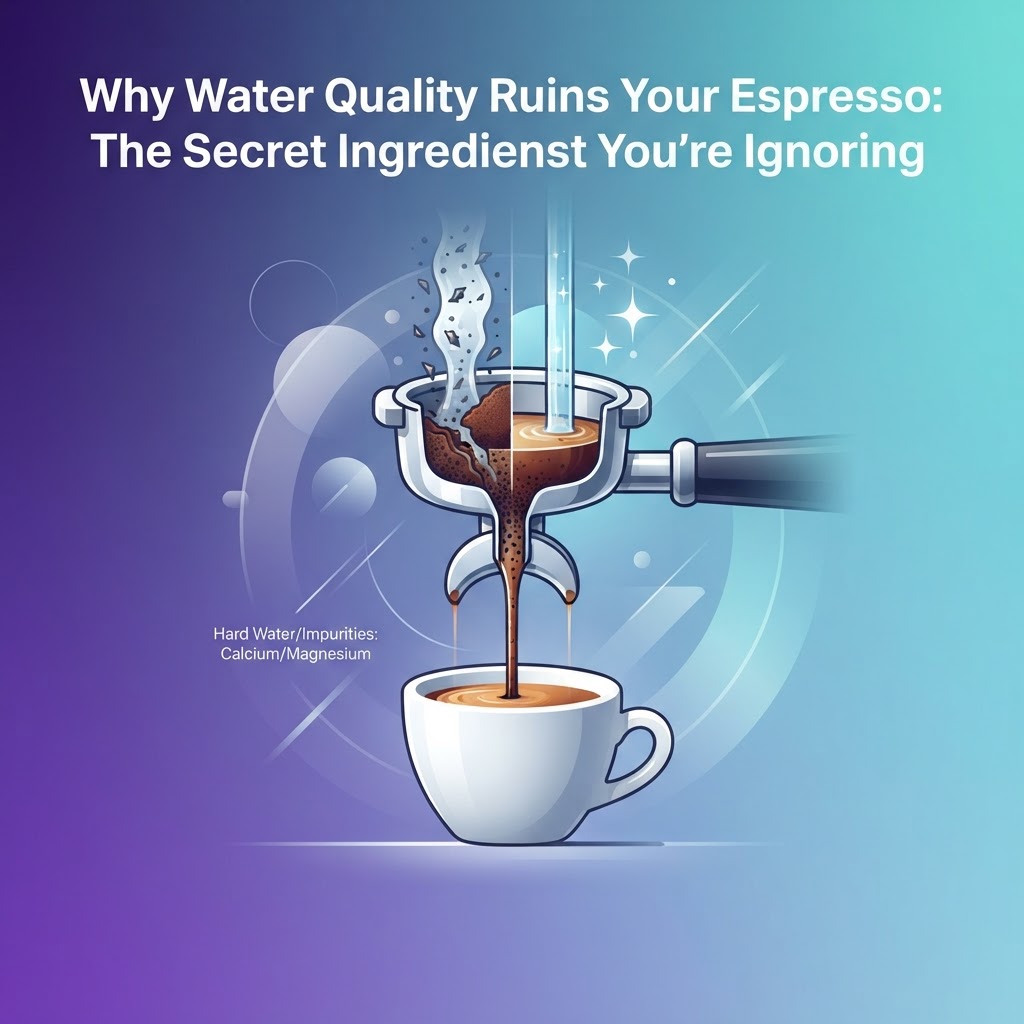
Why Water Quality Ruins Your Espresso: The Secret Ingredient You're Ignoring
Discover why espresso water quality is the most critical factor for perfect extraction and how to fix your brew for cafe-level results at home.
Key Takeaways
- Water makes up roughly 98% to 99% of your espresso shot.
- High mineral content leads to limescale, which destroys internal boiler components.
- Ideal brewing water requires specific levels of magnesium and calcium for proper flavor extraction.
- Using a simple carbon filter is insufficient; you need to manage hardness and alkalinity.
Introduction
You just bought your first high-end espresso machine, invested in a precision grinder, and sourced the finest single-origin beans. Yet, the shot tastes flat, chalky, or bitter. The culprit? It is almost certainly your tap water. Understanding espresso water quality is the single most significant leap you can make from being a hobbyist to a home barista. In fact, because water constitutes the vast majority of your final beverage, the chemical composition of your H2O dictates whether your coffee expresses its vibrant notes or sinks into a dull, acidic mess.
The Science: Why Water Chemistry Matters
Water is a solvent. As it passes through your coffee puck, it extracts oils, acids, and sugars. If the water is too "hard" (high in magnesium and calcium), it can over-extract, leading to bitter, drying sensations. If it is too "soft" (distilled or reverse osmosis with zero minerals), it lacks the ions necessary to grab those flavor compounds, resulting in a hollow, sour cup.
According to the Specialty Coffee Association (SCA), water should be clear, odorless, and possess specific alkalinity levels to maintain flavor balance. When you ignore your espresso water quality, you aren't just sabotaging flavor; you are actively corroding your machine's internals through mineral buildup, known as limescale, which can lead to costly repairs.
The Impact of Limescale on Your Machine
Limescale (calcium carbonate) deposits act like a crust inside your boiler and heating elements. This slows down heat transfer and causes your machine to work harder, eventually leading to pressure drops or complete pump failure. Once your heating element is coated, the temperature stability—the backbone of a good shot—vanishes.
How to Test Your Water
- Use a TDS (Total Dissolved Solids) meter to get a baseline reading.
- Purchase a water hardness test strip.
- Compare your results against manufacturer recommendations. Most espresso manufacturers, such as La Marzocco or Breville, specify an ideal hardness range between 50 and 150 ppm (parts per million).
Practical Solutions for Better Espresso
If your local water is poor, you have three primary options to improve your espresso water quality:
| Method | Cost | Effectiveness | Best For | | :--- | :--- | :--- | :--- | | Pitcher Filters | Low | Low-Medium | Casual drinkers | | Remineralized RO | High | Excellent | Dedicated enthusiasts | | Third Wave Water Packets | Low-Medium | High | Precision control |
Implementing a Workflow
For beginners, the easiest path is using distilled water mixed with mineral additives. This removes the variable of inconsistent tap water entirely. By controlling the exact mineral profile, you ensure that every shot is consistent, repeatable, and delicious.
At WebSpikes, we believe that data-driven consistency is the secret to success—whether you are perfecting a coffee extraction or managing a digital marketing campaign. Just as precise water chemistry yields the perfect espresso, our AI tools provide the precision needed to scale your brand’s content strategy.
Frequently Asked Questions
Does distilled water ruin my espresso machine? Yes. Pure distilled water lacks the mineral ions that certain sensors, like those in high-end boilers, require to function. It can also cause corrosion in some metals.
Can I just use a Brita filter? Standard carbon filters remove chlorine and odors but do very little to reduce hardness or manage alkalinity. They are a good starting point but rarely sufficient for specialty espresso.
What is the ideal TDS for espresso? Most experts recommend a TDS range between 75 and 150 mg/L for optimal flavor extraction.
How often should I descale? If you use proper filtered or remineralized water, you should rarely need to perform a deep descaling, which is safer for your machine's internal components.
Conclusion
Improving your espresso water quality is not just a technical chore; it is an act of respect for the coffee and the equipment you’ve chosen. By paying attention to the chemistry behind your brew, you unlock the full potential of your beans. When you are ready to apply that same level of precision and scaling to your marketing efforts, remember that WebSpikes offers the intuitive AI framework you need to achieve professional-grade results without the guesswork.