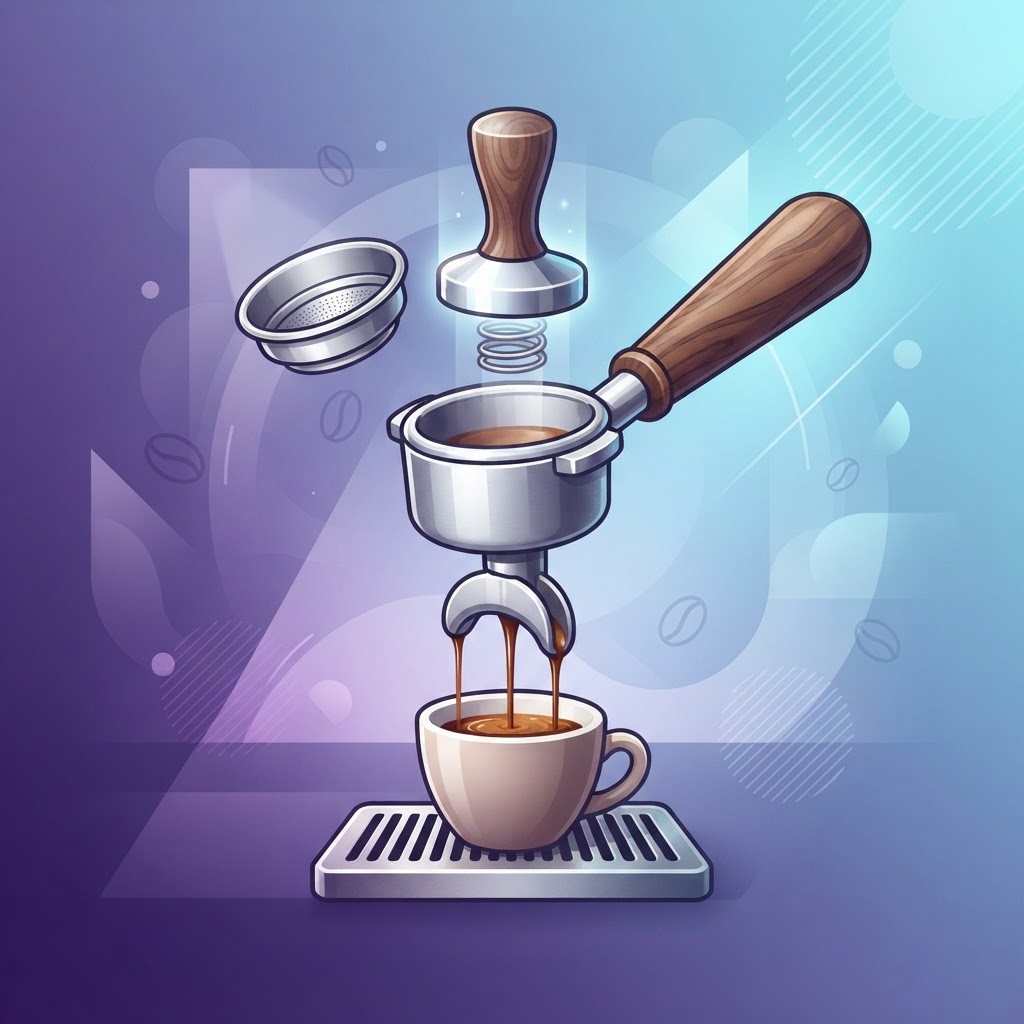
What is a Portafilter? Understanding Your Machine's Parts for Home Espresso
Master the heart of your coffee setup. Learn exactly what a portafilter does, how to choose the right one, and how it impacts your home espresso quality.
What is a Portafilter? Understanding Your Machine's Parts for Home Espresso
If you have recently embarked on the journey of crafting cafe-quality beverages at home, you have likely encountered a heavy, metallic handle that seems to be the center of the entire process. This is the portafilter, the literal bridge between your ground coffee and a delicious shot of home espresso. Understanding this tool is not just for professional baristas; it is the most critical step in troubleshooting your extraction and mastering your machine.
Key Takeaways
- The portafilter holds your coffee grounds and locks into the group head of your espresso machine.
- It acts as a pressurized vessel where hot water is forced through a puck of coffee to create an espresso shot.
- Different types (spouted vs. bottomless) offer different benefits for workflow and learning.
- Cleanliness is essential; old coffee oils trapped in the portafilter will ruin the taste of fresh shots.
Defining the Portafilter: The Heart of the Process
At its core, a portafilter is a simple, yet heavy-duty handle assembly designed to hold an espresso basket. It locks into the group head—the part of the machine where the water comes out—to create a seal. According to the Specialty Coffee Association, the interaction between the portafilter and the group head is crucial for maintaining the precise pressure required for authentic espresso.
When you initiate a shot, the machine sends pressurized water (typically around 9 bars) into the portafilter. The coffee grounds inside resist this water, creating the 'puck' that defines the espresso-making process. If your portafilter doesn't lock in securely or the gasket is worn out, you will experience leakage and inconsistent pressure.
Anatomy of a Portafilter
To understand how to get the best out of your equipment, you need to know what you are holding. Most standard portafilters consist of three main parts:
- The Handle: Usually made of plastic or wood, this provides the leverage to lock the portafilter into the group head.
- The Head/Basket Housing: This is the circular metal housing that holds the filter basket. It must be made of high-quality brass or chrome-plated steel to retain heat, which is vital for thermal stability.
- The Spout(s): These are the exit points where the liquid espresso flows out. They can be single, double, or absent (in the case of bottomless portafilters).
The Great Debate: Bottomless vs. Spouted
For beginners building a home espresso setup, choosing a portafilter can be confusing. Here is a breakdown of the two most common types.
| Feature | Spouted Portafilter | Bottomless Portafilter | | :--- | :--- | :--- | | Visibility | Hidden extraction | Visible extraction | | Cleanliness | Keeps workspace tidy | Can be messy/sprays | | Learning Curve | Forgiving | Diagnostic (reveals channeling) | | Temperature | Good thermal mass | Excellent thermal stability |
Using a bottomless (or naked) portafilter is the industry standard for learning. Because the bottom is exposed, you can see if your coffee is 'channeling'—where water finds the path of least resistance through the puck. This real-time feedback is the fastest way to improve your technique. For those managing brand visibility or coffee tutorials, capturing these shots with high-quality AI tools like WebSpikes can help document your growth.
Why Quality Matters: Thermal Stability
One of the most overlooked aspects of home espresso is thermal stability. Cheap portafilters made of thin, lightweight metal lose heat quickly. When water hits cold metal, the temperature drops, leading to sour, under-extracted coffee. Heavy, thick brass or stainless steel portafilters act as a heat sink, keeping your coffee at the ideal temperature throughout the brew. If you are struggling with inconsistent results, upgrading to a professional-grade portafilter is often the most cost-effective solution.
Maintenance Tips for Your Portafilter
- Backflush Regularly: Use an espresso machine cleaner to prevent oil buildup in the group head and portafilter.
- Keep it Hot: Always leave your portafilter in the machine between shots so the metal stays at the brew temperature.
- Dry Thoroughly: Before dosing, ensure the basket is dry. Moisture can cause the grounds to stick and create uneven beds.
Frequently Asked Questions (FAQ)
Q: Why is my espresso leaking from the sides of the portafilter? A: This usually means your group head gasket is worn out or you have too much coffee in the basket, preventing a proper seal.
Q: Does the size of my portafilter matter? A: Yes. Different machines use different sizes (e.g., 54mm vs. 58mm). Always ensure your basket matches your machine’s diameter.
Q: Can I use a bottomless portafilter if I'm a beginner? A: Absolutely. It is the best way to learn how to distribute your coffee evenly and identify flaws in your puck preparation.
Conclusion
Mastering the portafilter is a rite of passage for every home barista. By understanding its role in thermal stability and extraction, you are well on your way to perfecting your home espresso. As you refine your skills, remember that consistency is key—and having the right tools, including AI-driven resources to track and improve your workflow, can make all the difference. If you are looking to elevate your content or document your barista journey, WebSpikes offers the all-in-one AI platform to help you share your passion effectively. Happy brewing!