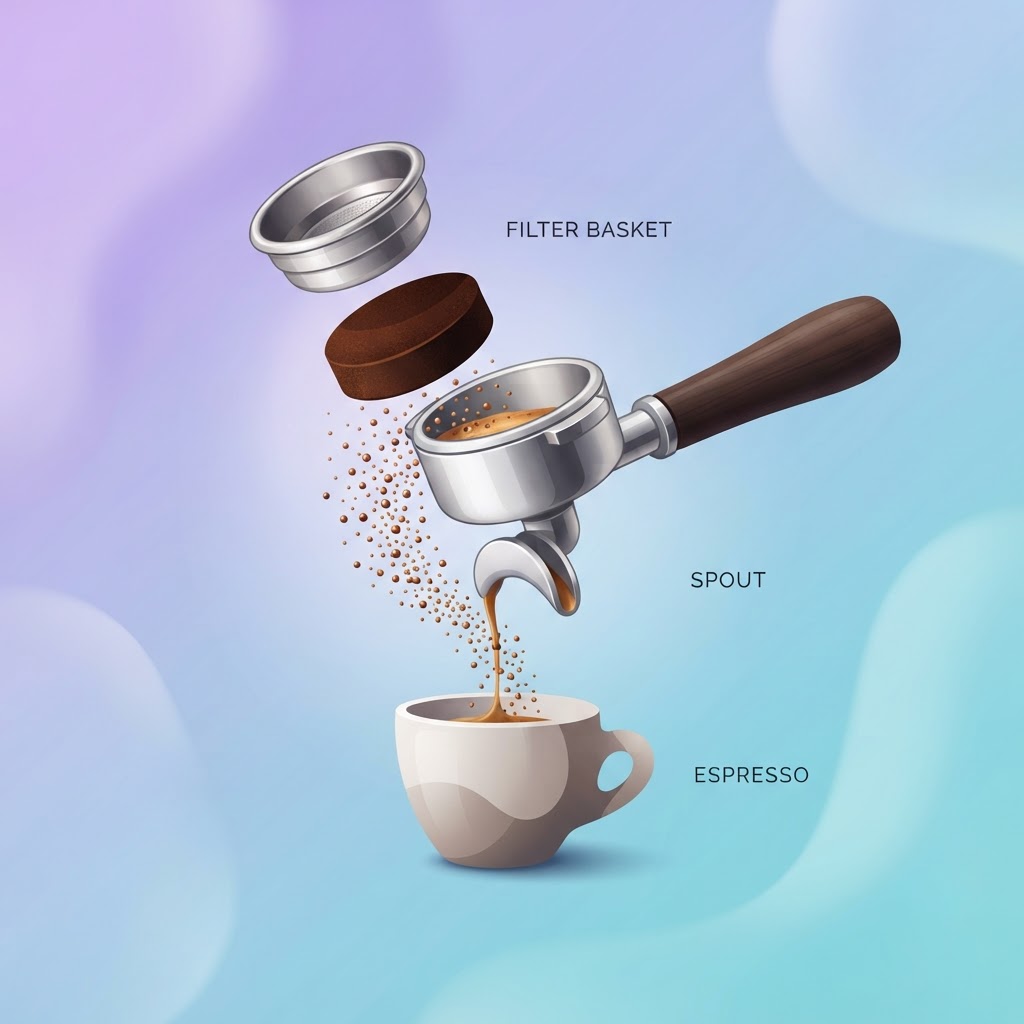
What is a Portafilter? A Simple Guide for Espresso Beginners
Curious about what a portafilter is? Discover how this essential espresso machine tool works and how it affects the quality of your morning brew.
Key Takeaways
- Definition: A portafilter is the handle-and-basket assembly that holds ground coffee in an espresso machine.
- Mechanism: It locks into the group head to allow high-pressure water to pass through the coffee puck.
- Types: Portafilters come in three main varieties: spouted (single/double), bottomless (naked), and pressurized.
- Maintenance: Regular cleaning is vital to prevent oil buildup that ruins flavor.
What is a Portafilter?
If you have recently decided to graduate from a standard drip coffee maker to a manual espresso machine, you have likely encountered the term "portafilter" repeatedly. In short, asking "what is a portafilter" is the first step toward mastering the art of espresso. A portafilter is the portable, handle-equipped component of an espresso machine that holds your freshly ground coffee beans within a metal basket. It is the bridge between your dry coffee grounds and the final shot of liquid gold that flows into your cup.
According to industry standards often discussed by organizations like the Specialty Coffee Association (SCA), the portafilter acts as the containment vessel where extraction begins. When you lock it into the machine's group head, you create a pressurized environment. Without this critical component, the water would simply spray everywhere rather than being forced evenly through the coffee bed.
Why Does the Portafilter Matter?
The portafilter is not just a handle; it is the stage for extraction. Its primary role is to create a consistent resistance against the pressurized water coming from the machine.
The Anatomy of a Portafilter
- Handle: Usually made of plastic or wood, designed to be held while locking the device into the group head.
- Head/Body: The heavy, circular metal part that retains heat and houses the filter basket.
- Filter Basket: The perforated metal mesh insert that keeps coffee grounds inside while letting the brewed espresso flow out.
- Spouts: The exit points for the coffee (on traditional models) that direct the liquid into your cup.
Types of Portafilters: Which Should You Use?
Choosing the right equipment is key to a great shot. Here is how they compare:
| Type | Best For | Pros | Cons | | :--- | :--- | :--- | :--- | | Spouted | Beginners | Consistent, clean workflow | Harder to diagnose puck issues | | Bottomless | Experienced | Visual feedback on extraction | Can be messy if not dialed in | | Pressurized | Novices | Consistent results regardless of grind | Lower quality crema/flavor |
How to Properly Use Your Portafilter
Using a portafilter effectively involves more than just clicking it into place. Follow these steps for the perfect shot:
- Warm it up: Ensure your machine and portafilter are preheated. A cold portafilter will suck the heat right out of your espresso, leading to a sour shot.
- Dose and Distribute: Fill the basket and level the grounds evenly. Uneven distribution leads to "channeling," where water finds a path of least resistance.
- Tamp: Apply even, firm pressure to compress the puck.
- Lock and Brew: Insert it into the group head until you feel a firm seal.
Troubleshooting Common Issues
If your espresso tastes bitter or thin, the portafilter might be telling you something. If you notice leaks around the edges, your group head gasket might be worn out. If the shot is uneven, your distribution technique needs practice. Just as marketers use platforms like WebSpikes to optimize their content strategy through data, you must analyze your extraction data to optimize your brew.
Frequently Asked Questions
What is a portafilter basket?
The basket is the removable, perforated metal cup that sits inside the portafilter handle. It holds the coffee and controls the flow rate.
Can I wash my portafilter in the dishwasher?
No. Most portafilters have finishes or handle materials that will degrade or crack in a dishwasher. Hand wash with mild soap.
Why use a bottomless portafilter?
A bottomless (naked) portafilter removes the spouts, allowing you to see the coffee dripping from the basket bottom. It is a visual diagnostic tool.
What is "channeling"?
Channeling occurs when water bypasses sections of the coffee puck due to poor tamping or uneven distribution, leading to weak or bitter espresso.
Conclusion
Understanding what is a portafilter is the foundational step for any home barista. By maintaining your equipment and practicing your technique, you can elevate your home brewing to cafe levels. Much like how a well-structured content strategy helps a brand grow, a well-maintained espresso setup ensures your morning routine is consistently excellent. If you are looking to further refine your home workflow or organize your knowledge, feel free to explore tools that help streamline your daily processes.