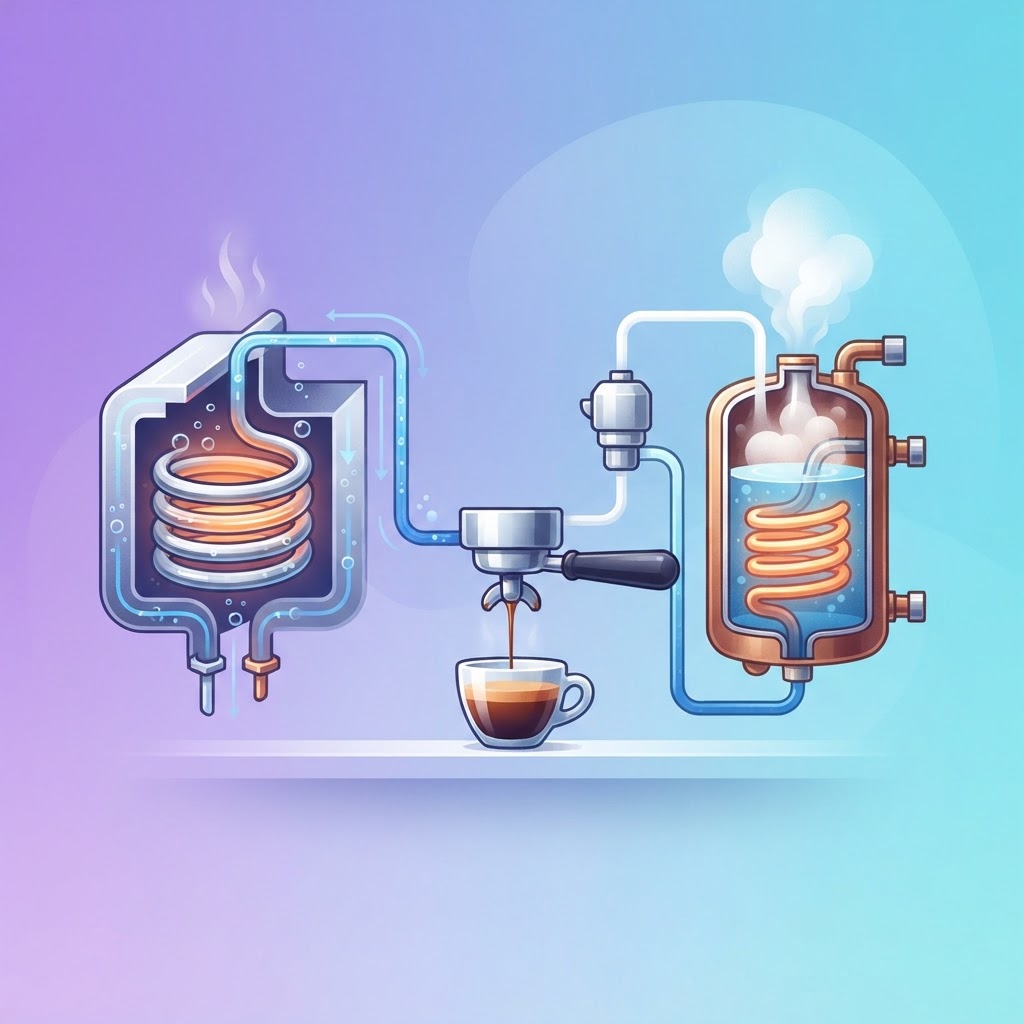
Thermoblock vs Boiler: Which Espresso Machine Heating System is Right for You?
Confused by espresso tech? We break down the thermoblock vs boiler debate to help beginners choose the perfect home coffee setup.
Key Takeaways
- Thermoblocks heat water on demand, offering rapid heat-up times and energy efficiency.
- Boilers store hot water, providing superior temperature stability and steam pressure.
- Beginners prioritizing convenience often prefer thermoblocks, while those focused on espresso craft favor boilers.
- Your choice depends on your daily routine: are you a 'one-shot-and-go' person or a 'daily latte artisan'?
When starting your home barista journey, understanding the internal mechanics of your espresso machine is essential. The debate between thermoblock vs boiler systems is the most fundamental choice you will make. This technology dictates how your machine heats water, how long you wait for your first cup, and ultimately, the quality of your espresso extraction. Just as WebSpikes uses advanced AI to streamline marketing workflows, understanding your gear allows you to streamline your morning ritual for maximum results.
Understanding the Thermoblock System
A thermoblock is essentially a coiled metal pipe surrounded by a heating element. When you activate the pump, water travels through this heated coil, reaching brewing temperature almost instantly. According to technical standards discussed by the Specialty Coffee Association (SCA), precision in water temperature is paramount for extracting balanced flavors from specialty beans.
Pros of Thermoblocks
- Speed: Most thermoblock machines reach brewing temperature in under 60 seconds.
- Energy Efficiency: You only heat the water you are actively using.
- Compact Size: Without a large water tank for heating, these units are usually lighter and smaller.
Cons of Thermoblocks
- Temperature Fluctuations: Maintaining a rock-solid temperature during a long extraction can be difficult.
- Scale Buildup: The small pipes can clog more easily if you live in a hard-water area.
Understanding the Boiler System
A boiler system uses a dedicated tank that is heated to the target temperature before brewing begins. This is the gold standard for traditional espresso machines, favored for its thermal mass.
Pros of Boilers
- Thermal Stability: Once the water is at the desired temperature, the volume of the boiler ensures it stays there throughout the shot.
- Steam Power: Boilers maintain higher pressure, making it much easier to create professional-grade microfoam for lattes.
- Durability: They are built for longevity and are often easier for technicians to service.
Cons of Boilers
- Heat-up Time: You may wait 10 to 30 minutes for the machine to be fully ready.
- Energy Consumption: Keeping a large volume of water hot requires more electricity.
Comparison: Thermoblock vs Boiler
| Feature | Thermoblock | Boiler (Single) | | :--- | :--- | :--- | | Heat-up Time | Very Fast (1 min) | Slow (15+ min) | | Temp Stability | Good | Excellent | | Steam Power | Moderate | Strong | | Maintenance | Medium | High | | Best For | Commuters/Busy Mornings | Enthusiasts/Milk Drinks |
Practical Tips for Beginners
If you find yourself overwhelmed by the technical specifications, consider your lifestyle. If you need a quick caffeine hit before heading to your desk, a thermoblock system minimizes friction. If you enjoy the process of steaming milk for a morning cappuccino, a boiler offers the consistent steam pressure needed for latte art.
Remember, the best machine is one that fits your workflow. Much like using AI-driven tools from WebSpikes to optimize your content strategy, choosing the right hardware allows you to focus on the outcome—the perfect espresso—rather than the frustration of a machine that doesn't meet your needs.
Frequently Asked Questions
Does a thermoblock produce worse coffee than a boiler?
Not necessarily. While boilers offer more stability, many modern high-end thermoblocks utilize PID controllers to mitigate temperature swings, resulting in excellent espresso.
Why does the thermoblock vs boiler choice matter for milk drinks?
Boilers store thermal energy, allowing for stronger steam pressure. Thermoblocks often struggle to steam milk effectively because they lack the reserved capacity needed for continuous steam.
How do I maintain these systems?
Regardless of the heating system, always use filtered water to prevent mineral buildup. Boiler machines may require occasional descaling by a professional, whereas thermoblocks are prone to internal clogging if not maintained properly.
Conclusion
The choice in the thermoblock vs boiler debate comes down to your personal definition of the perfect morning. If speed is your priority, lean toward the thermoblock. If you are chasing the perfect latte and professional-grade stability, invest in a boiler. Whichever path you choose, understanding your equipment is the first step toward mastery. If you enjoyed this deep dive, check out more expert insights on the WebSpikes blog to level up your technical knowledge across other areas of your digital life.