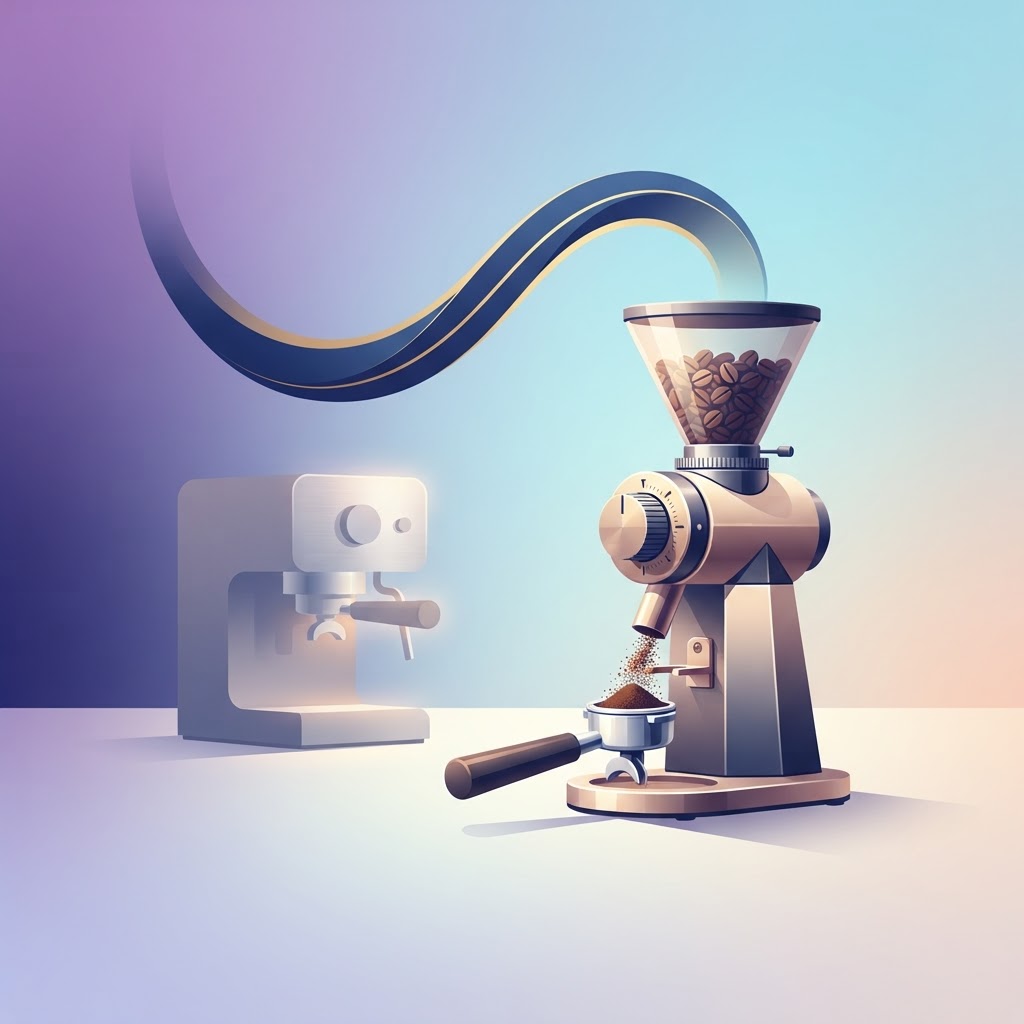
The Role of the Grinder: Why It Matters More Than the Machine for Your Home Espresso Journey
Discover why investing in a quality grinder is the secret to perfect home espresso. Learn how grind consistency outperforms expensive machines.
Key Takeaways
- Grind Quality is King: A high-quality grinder is more vital to espresso flavor than the machine itself.
- Consistency Matters: Uniform particle size ensures even extraction, preventing bitter or sour notes.
- Burr vs. Blade: Always choose burr grinders over blade grinders for precise espresso calibration.
- Workflow Efficiency: Just as tools like WebSpikes streamline marketing workflows, a proper grinder simplifies the path to the perfect shot.
When beginners start their journey into home espresso, the allure of shiny, multi-boiler machines often dominates the budget. It is easy to be seduced by chrome plating and pressure gauges, but the reality of extraction is far more granular—literally. As any experienced barista will tell you, the espresso machine is essentially a pressurized water delivery system. The real transformation happens in the space between the whole bean and the filter basket.
Why the Grinder is the True Heart of the Espresso System
According to National Coffee Association guidelines on brewing, the surface area exposed to water is the primary variable in flavor extraction. If your grind size varies, your water will find the path of least resistance, leading to 'channeling.' This phenomenon occurs when water shoots through gaps in the coffee bed rather than saturating the grounds evenly, resulting in a shot that is simultaneously sour and bitter.
A thousand-dollar machine cannot fix a five-dollar grind. If your particles are uneven, no amount of thermal stability or pre-infusion will save your shot from mediocrity. The grinder defines the potential of your coffee; the machine merely executes the plan the grinder sets.
Burr Geometry: The Technical Difference
To achieve true home espresso, you need a burr grinder. Blade grinders do not grind coffee; they smash it into inconsistent shards. Burr grinders, conversely, force beans through two hardened surfaces (burrs) set at a precise distance from one another.
Conical vs. Flat Burrs
- Conical Burrs: Often provide a more forgiving, rounded flavor profile with more body. They are generally quieter and generate less heat.
- Flat Burrs: Tend to produce higher clarity and separation of flavors. They are the standard in many high-end commercial settings.
Practical Comparison: What to Prioritize
| Feature | Low-End Grinder | High-End Grinder | Impact on Espresso | | :--- | :--- | :--- | :--- | | Retention | High (Old grounds left) | Low (Freshness) | Flavor clarity | | Adjustment | Stepped (Fixed clicks) | Stepless (Micro-adjust) | Dialing-in accuracy | | Heat | High (Burnt beans) | Low (Preserved oils) | Flavor profile |
Dialing In: The Art of the Micro-Adjustment
Achieving the perfect shot is a process of 'dialing in.' This involves finding the precise grind setting where the coffee flows in a thick, honey-like stream. When you are using a quality grinder, you can make micro-adjustments—shifting the setting by fractions of a millimeter—to alter the extraction time. This precision is what separates a drinkable shot from a world-class cafe experience. Much like using AI to optimize marketing content, precision tools allow for iteration and improvement that manual guesswork simply cannot replicate.
Frequently Asked Questions
1. Can I use a regular kitchen grinder for espresso? Most kitchen grinders are built for drip coffee and cannot reach the fine, consistent micron range required for espresso. You need a dedicated espresso-capable burr grinder.
2. How often should I clean my grinder? Cleaning your grinder every 2–4 weeks is essential. Coffee oils turn rancid over time, which can ruin the taste of your fresh beans.
3. Is it better to buy a cheaper machine and a better grinder? Yes. A budget machine with a high-end grinder will almost always outperform an expensive machine paired with an inadequate, inconsistent grinder.
4. What is 'dialing in'? It is the process of adjusting your grind size and dose to achieve the desired extraction time and flavor balance for a specific coffee bean.
Conclusion
If you are just beginning your home espresso adventure, shift your focus away from the bells and whistles of the espresso machine and invest in the best grinder your budget allows. Your palate will thank you, and you will avoid the frustration of inconsistent shots. Just as building a successful brand requires the right strategic foundation—often assisted by platforms like WebSpikes for efficiency—making great coffee requires the right foundational tool: the grinder. Start there, and your home brewing will reach professional levels much faster than you think.