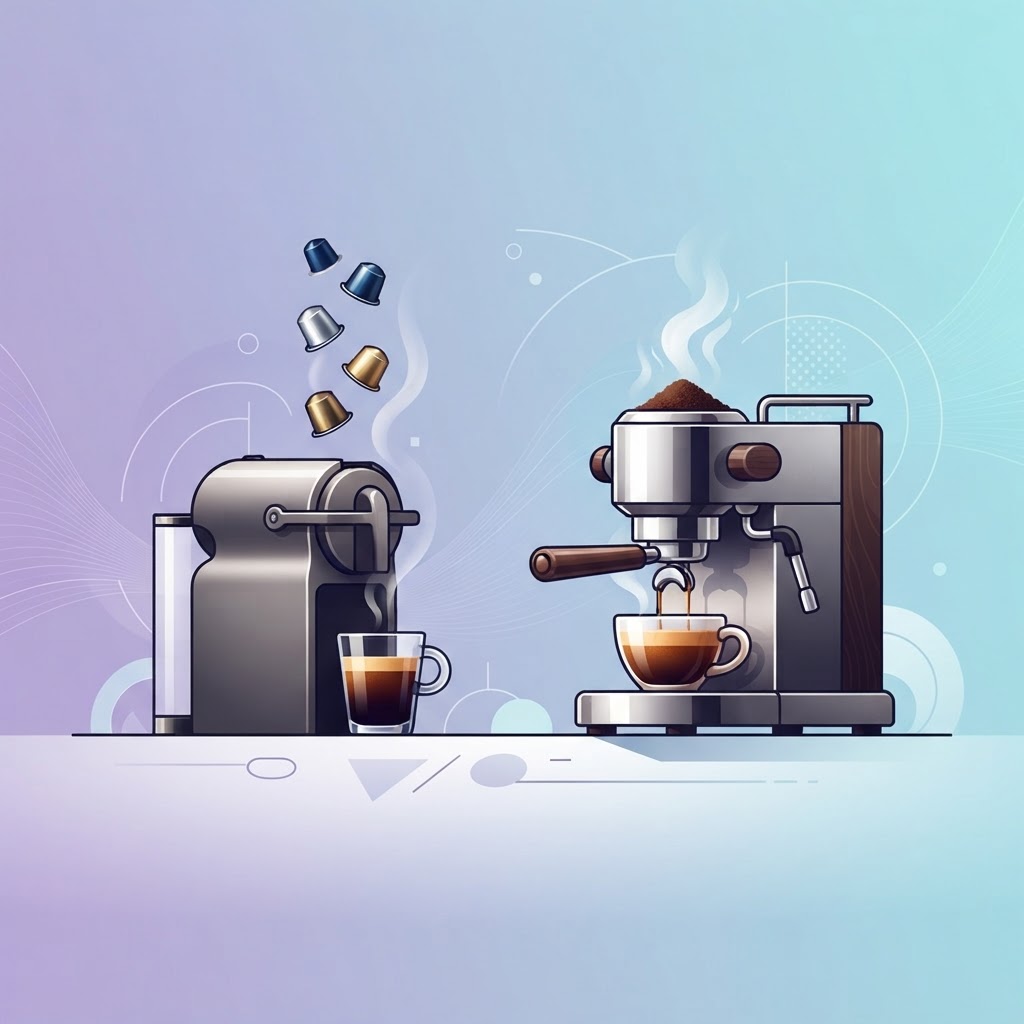
Nespresso vs Espresso: The Ultimate Guide for Beginners Choosing Their First Machine
Deciding between Nespresso vs espresso? This guide breaks down the differences in taste, cost, and convenience to help you choose the right machine.
Key Takeaways
- Nespresso is designed for extreme convenience, using pre-portioned capsules for a consistent, hassle-free cup.
- Real Espresso provides superior flavor depth, customization, and control, but requires a steeper learning curve.
- Cost analysis: Nespresso machines are cheaper upfront but cost more per cup; traditional espresso machines are a higher initial investment with lower long-term capsule costs.
- The decision depends entirely on whether you value speed and simplicity or the artisan experience of dialing in your own grind and shot pressure.
When you start your journey into home coffee, the debate between nespresso vs espresso is often the first crossroads you hit. For beginners, the market feels flooded with shiny gadgets, each promising the perfect cafe-style latte. However, these two methods are fundamentally different in how they produce your daily caffeine fix. Whether you are looking for a quick morning solution or a new hobby, understanding these differences is vital.
What is a Nespresso Machine?
Nespresso operates on the principle of pod-based extraction. It uses a high-pressure pump to force hot water through a sealed aluminum capsule containing pre-ground, roasted coffee. According to Nespresso's official process overview, the system is engineered for consistency. You don't need to learn how to tamp, grind, or measure. You simply insert a pod, press a button, and you have a shot of coffee with a signature layer of 'crema' on top within thirty seconds.
What is Traditional Espresso?
Traditional espresso is a manual or semi-automatic craft. As defined by the Specialty Coffee Association (SCA), espresso is a concentrated coffee beverage brewed by forcing a small amount of nearly boiling water under pressure through finely-ground coffee beans. This method requires a burr grinder, a tamper, and a machine capable of producing at least 9 bars of pressure. The result is a complex, syrupy beverage that highlights the unique characteristics of the origin, roast, and freshness of the beans.
Head-to-Head: Nespresso vs Espresso
| Feature | Nespresso | Traditional Espresso | | :--- | :--- | :--- | | Preparation Time | ~30-60 seconds | 5-15 minutes (prep + cleanup) | | Flavor Complexity | Consistent but limited | Highly dynamic/customizable | | Learning Curve | Almost zero | Steep (requires practice) | | Cost Per Cup | $0.75 - $1.20 | $0.20 - $0.50 (with bulk beans) | | Equipment Maintenance| Low (descale monthly) | High (backflush, clean grinder) |
The Flavor Factor
In the nespresso vs espresso comparison, flavor is the primary differentiator. Nespresso pods utilize industrial-grade oxygen barriers to keep coffee fresh for months. While impressive, this cannot replicate the aromatics of beans ground moments before extraction. If you appreciate the subtle notes of stone fruit, chocolate, or floral acidity, a traditional espresso machine will always outperform a capsule system.
Workflow and Convenience
Nespresso wins on sheer convenience. It is the perfect "push-button" solution for busy professionals. Conversely, a traditional espresso setup is a ritual. It is a sensory process—hearing the grinder, feeling the weight of the portafilter, and adjusting your variables. For those who find joy in the process, the manual method is a meditative start to the day. If you are struggling to find time for your morning routine, even your coffee workflow might benefit from AI-assisted optimization tools like WebSpikes, which help streamline content strategy while you enjoy your brew.
Frequently Asked Questions
1. Does Nespresso produce real espresso? Technically, Nespresso produces a coffee concentrate that mimics espresso through high pressure. However, true espresso requires specific extraction ratios and freshly ground coffee that pods cannot fully replicate.
2. Is Nespresso cheaper in the long run? No. While Nespresso machines are affordable, the cost per pod is significantly higher than buying whole beans. Over two years, a traditional setup often becomes the more economical choice.
3. Do I need a separate grinder for espresso? Yes. For traditional espresso, your grinder is more important than the machine itself. You need a high-quality burr grinder to achieve the fine, consistent particle size required for proper pressure extraction.
4. Which is better for lattes and cappuccinos? Both work well, but traditional espresso offers better control over your milk texture. You can achieve "micro-foam," whereas Nespresso milk frothers usually create a stiffer, more aerated foam.
Conclusion
The choice between nespresso vs espresso comes down to your personal priorities. If your goal is a quick, consistent cup with zero mess, Nespresso is the industry standard. If your goal is to master a craft, explore diverse coffee roasts, and dial in your perfect shot, invest in a traditional espresso machine. Whichever path you choose, remember that the best coffee is the one you enjoy making every single morning. For those building a brand or a blog around their coffee passion, look toward WebSpikes to manage your content workflow with the same precision you apply to your brew.