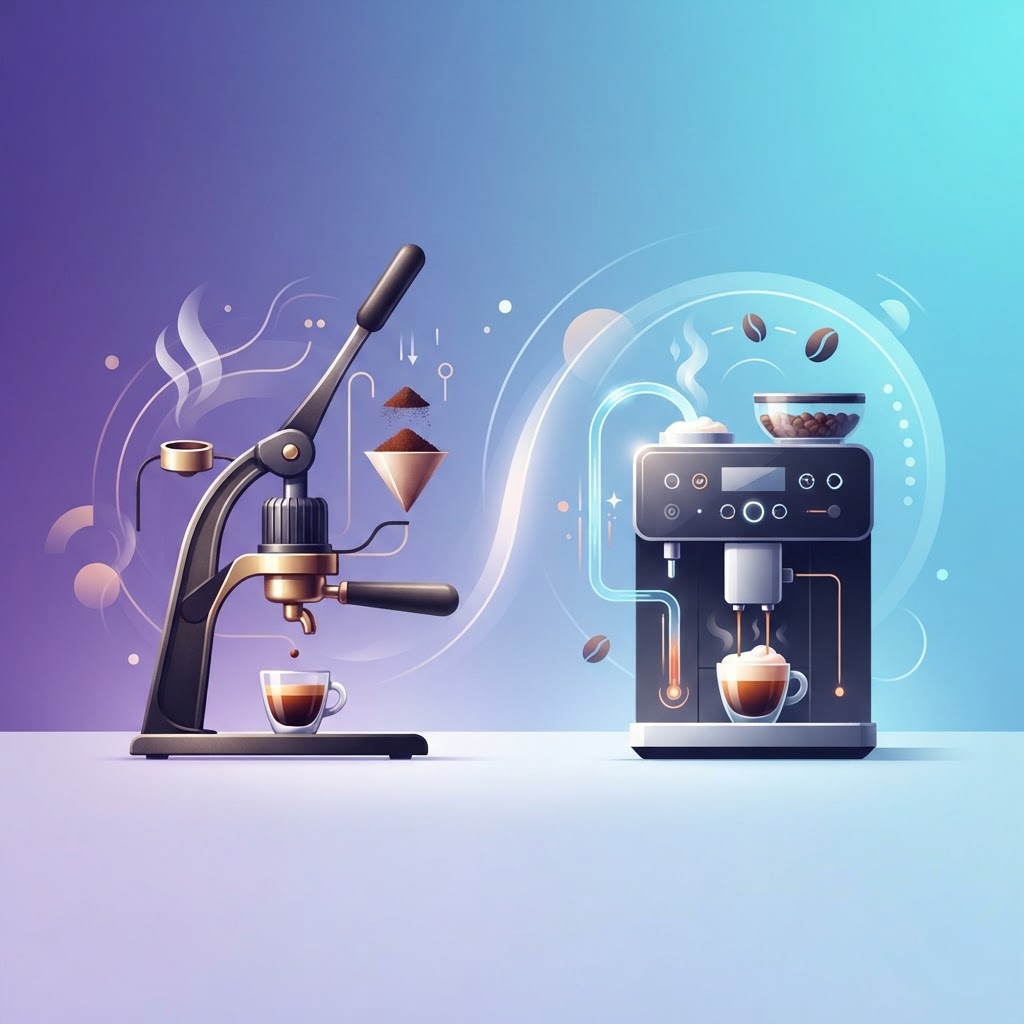
Manual vs Automatic Espresso: Choosing the Perfect Machine for Your Home
Confused about manual vs automatic espresso machines? We break down the differences to help beginners choose the perfect setup for their home coffee bar.
Key Takeaways
- Manual machines offer total control over pressure and flow, rewarding the dedicated enthusiast.
- Automatic machines provide consistency and speed, making them ideal for busy morning routines.
- Your choice depends on whether you prioritize the craft of brewing or the convenience of the final cup.
- Beginners should evaluate their tolerance for learning curves and the time they have available to dedicate to their coffee ritual.
Choosing between manual vs automatic espresso is the most significant decision a burgeoning home barista will make. When you decide to elevate your coffee game beyond standard drip brew, the machine you choose dictates not just the flavor profile of your drink, but the very nature of your morning routine. At WebSpikes, we believe in optimizing every part of your day—and that starts with the perfect extraction.
Understanding the Manual Espresso Experience
Manual espresso machines, often referred to as lever machines, rely on the physical force of the user to generate pressure. According to the Specialty Coffee Association, the pressure required for traditional espresso is typically between 8 and 10 bars. In a manual setup, you are the pump.
This hands-on approach allows for "pressure profiling." You can start with a low-pressure pre-infusion to saturate the grounds evenly before ramping up to full pressure. This nuance can highlight subtle acidity or chocolatey sweetness in high-end, single-origin beans. However, this mastery requires a steep learning curve. If your grind size isn't perfect or your tamping pressure is uneven, the manual nature of the machine will reveal these flaws immediately.
The Automatic Advantage: Convenience Meets Consistency
Automatic espresso machines (and their super-automatic counterparts) bridge the gap between effort and quality. These machines use internal electric pumps to maintain precise pressure and PID controllers to keep water temperature stable. As noted by National Coffee Association, the consistency of water temperature and pressure is vital to preventing bitter, over-extracted shots.
For the beginner, an automatic machine removes the guesswork. With the push of a button, the machine manages the grind, the dose, and the shot time. It is a fantastic option if you value speed and want a café-quality latte before your commute without needing a degree in physics.
Comparison Table: Which Style Fits You?
| Feature | Manual Machine | Automatic Machine | | :--- | :--- | :--- | | Learning Curve | High | Low | | Consistency | Variable (User dependent) | High (Machine dependent) | | Customization | Infinite (Pressure profiling) | Programmatic (Settings-based) | | Prep Time | 5-10 minutes | 1-2 minutes | | Maintenance | Low (Few electronics) | High (Descaling/Internal cleaning) |
Choosing Your Style: Practical Tips
If you find yourself gravitating toward the manual style, look for machines with a "spring-lever" design to help manage the pressure. If you prefer the automatic route, prioritize a model with a robust burr grinder integrated into the unit. Just as we use AI tools at WebSpikes to streamline content strategy, selecting the right machine is about identifying the tool that best fits your daily workflow.
FAQ: Manual vs Automatic Espresso
Q: Is the coffee from a manual machine always better? A: Not necessarily. Manual machines offer higher potential for customization, but automatic machines offer higher consistency for the average user.
Q: Do I need a separate grinder for a manual machine? A: Yes, in almost all cases. A high-quality burr grinder is essential for manual espresso, whereas many automatic machines include one.
Q: Which is easier to clean? A: Manual machines are generally easier to clean as they lack complex internal tubing and sensors, though they require more manual rinsing of the portafilter.
Conclusion
Whether you choose the artistic, tactile experience of a manual vs automatic espresso machine, the ultimate goal is a delicious cup of coffee. If you enjoy the process of learning and fine-tuning variables, go manual. If you need efficiency and reliable results every single morning, automatic is your best friend. Much like choosing the right marketing automation tools, the best choice is the one that allows you to spend your time on what you value most. Explore your options, start brewing, and enjoy the journey to the perfect shot.