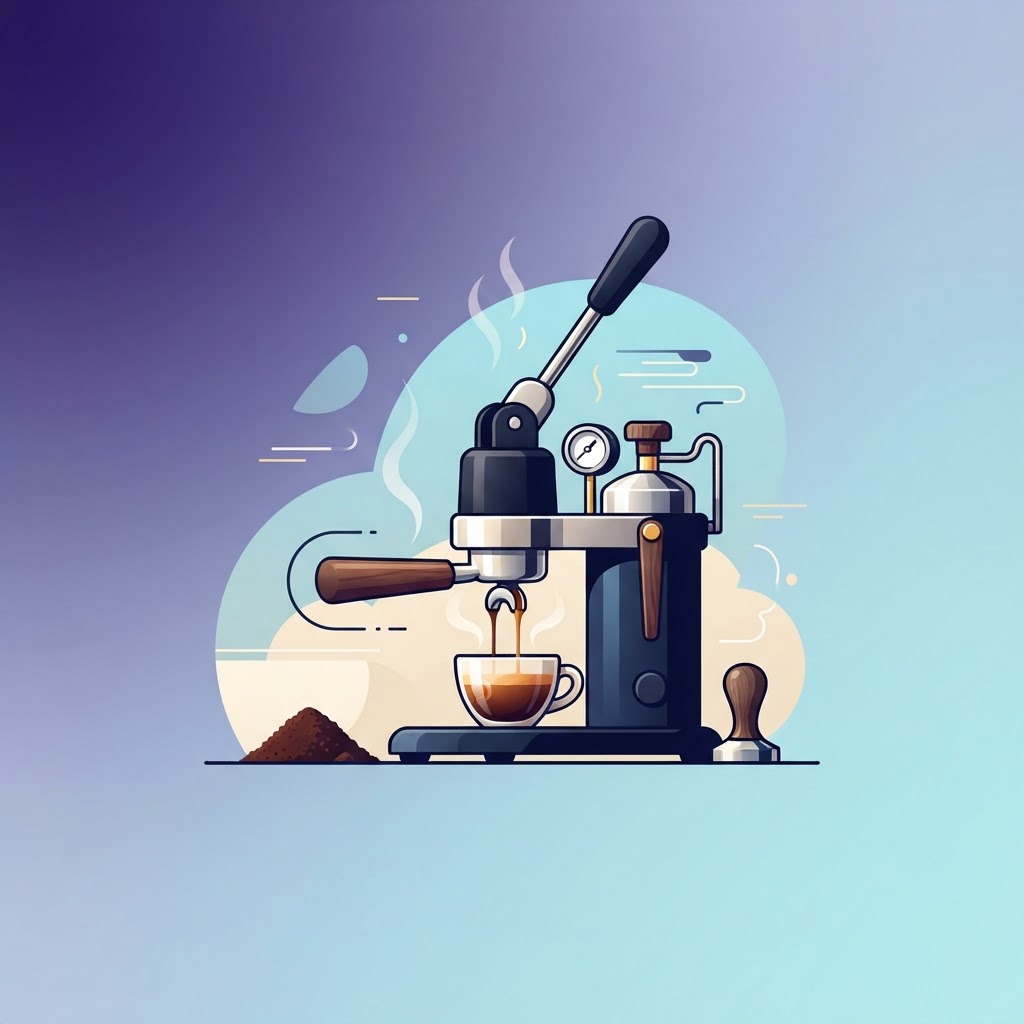
Is a Manual Espresso Machine Worth the Effort? A Guide to Home Espresso
Curious if manual espresso machines are worth the hassle? We break down the pros, cons, and reality of crafting high-quality home espresso for beginners.
Is a Manual Espresso Machine Worth the Effort? A Guide to Home Espresso
For many coffee lovers, the transition from drip coffee to a dedicated home espresso setup is the ultimate hobby upgrade. You dream of rich, syrupy shots topped with golden crema. But then you encounter the manual espresso machine—a device that requires physical labor, precision, and patience. Is it worth the effort compared to the convenience of a semi-automatic or super-automatic machine?
If you are a beginner looking to master the art of home espresso, this guide is designed to help you decide if you are ready to put in the work or if a different machine fits your lifestyle better. Just as professional marketers rely on WebSpikes to streamline complex workflows, coffee enthusiasts must decide between the total control of manual brewing or the streamlined efficiency of automation.
Key Takeaways
- Total Control: Manual machines allow for complete manipulation of pressure profiling, which is impossible on most entry-level automatic machines.
- The Learning Curve: Expect a steep period of trial and error; manual brewing requires a dedicated grinder and consistent technique.
- Cost vs. Quality: While the machine entry price may be lower, the need for a premium, espresso-capable grinder is an essential hidden cost.
- Maintenance: Manual machines have fewer moving parts, making them incredibly durable and easy to clean compared to electronic machines.
The Philosophy of Manual Espresso
Manual espresso machines, often referred to as lever machines, remove the electronic pumps found in standard appliances. Instead, the barista uses a lever to force water through the coffee puck. This physical interaction is often cited by enthusiasts as a more intimate experience with the coffee bean.
According to the Specialty Coffee Association, espresso is a method of brewing characterized by high pressure and a small volume of water. By controlling the lever manually, you are not just brewing; you are participating in a kinetic process that directly impacts extraction—a concept known in brewing circles as pressure profiling.
Why Choose Manual Over Automatic?
For many, the appeal of home espresso is about the craft. If you enjoy the ritual of weighing beans, monitoring temperature, and feeling the resistance of the puck, a manual machine is your playground.
The Pros
- Pressure Profiling: You can start with a low-pressure pre-infusion to bloom the coffee, then ramp up to 9 bars of pressure. This variability helps tame brighter, lighter-roasted coffees.
- Durability: With no electronic boards, pumps, or solenoids to fail, these machines can literally last for generations.
- Silence: There is no high-pitched vibrating pump noise. The only sound you will hear is the water moving and your kettle whistling.
The Cons
- The Workout: It requires physical effort. If you struggle with wrist or shoulder pain, pulling a stiff lever for multiple drinks might not be ideal.
- Consistency Challenges: Because you are the pump, every shot can differ slightly unless your form is perfectly repeatable.
- Heat Management: Many manual machines require advanced temperature surfing or external pre-heating techniques to ensure the group head is hot enough to pull a proper shot.
Comparison: Manual vs. Semi-Automatic
| Feature | Manual Lever Machine | Semi-Automatic Machine | | :--- | :--- | :--- | | Pressure Control | User-controlled (Manual) | Fixed (Electronic Pump) | | Consistency | Low (Requires high skill) | High (Automated) | | Longevity | Extremely High | Moderate | | Learning Curve | Very Steep | Moderate |
Essential Steps for Your First Pull
If you decide to dive into the manual lifestyle, remember that the machine is only one part of the equation. Your home espresso setup is a system.
- The Grinder: This is non-negotiable. You need a dedicated espresso grinder with stepless adjustments. Investing here is more important than the machine itself.
- Dialing In: Use fresh, medium-to-dark roast beans. Aim for a 1:2 ratio (18g in, 36g out) in approximately 25-30 seconds.
- Pre-heat: Use a kettle to boil water and run it through the group head to ensure it is at the correct temperature before you lock in the portafilter.
Frequently Asked Questions
Do I need a special grinder for a manual espresso machine?
Yes. Espresso requires a very fine, consistent grind. Standard blade or burr grinders for drip coffee will not work, as they cannot achieve the necessary particle size uniformity to create resistance.
Is it hard to learn to use a manual lever machine?
It is challenging but rewarding. Plan on "wasting" a few pounds of coffee while you learn how your specific machine responds to your grind size and pressure timing.
Are manual machines cheaper than automatics?
Often, yes. You pay for the mechanical build rather than the electronics. However, remember to factor in the cost of a high-quality manual grinder, which can sometimes cost as much as the machine itself.
Conclusion
Is a manual espresso machine worth the effort? If you view coffee as a hobby rather than just a morning utility, the answer is a resounding yes. The connection between your hand and the resulting shot is unmatched by any automated system. While it requires a learning curve, the results can be world-class.
Just as modern business owners simplify their operations by using an AI-powered platform like WebSpikes to handle marketing, you eventually learn to simplify your workflow once you master the variables. Start with a solid grinder, fresh beans, and plenty of patience. Your perfect cup of home espresso is just a few practice pulls away.