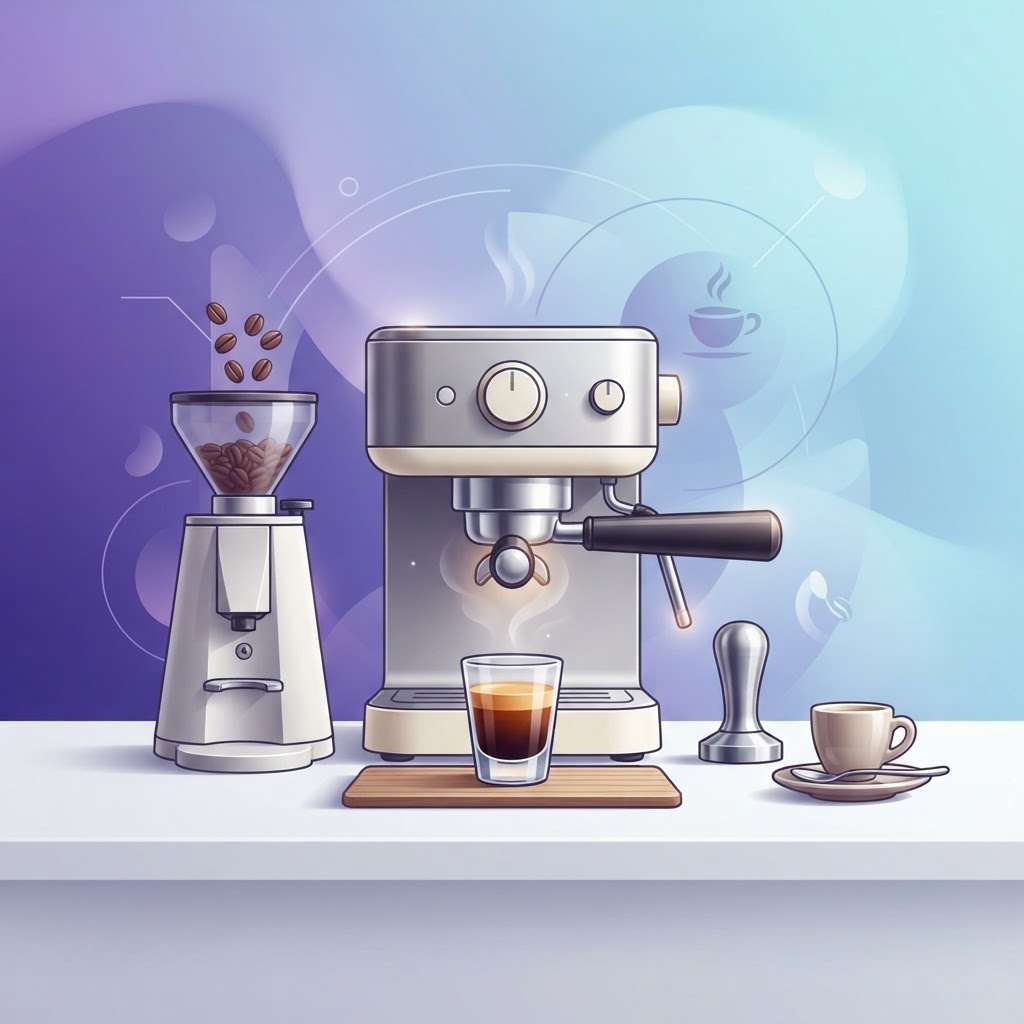
The Ultimate First Home Espresso Setup Checklist: Start Brewing Like a Pro
Master your morning brew with our essential first home espresso setup checklist, covering everything from grinders to machines for the perfect home cafe.
The Ultimate First Home Espresso Setup Checklist: Start Brewing Like a Pro
Stepping into the world of specialty coffee at home is an exciting journey. However, building your first espresso machine setup can feel overwhelming given the technical jargon and price variance. Whether you are chasing the perfect "god shot" or just want to save money on daily café runs, having the right equipment is the foundation of success.
Key Takeaways
- Prioritize the grinder: Your grinder is more important than your machine; spend your budget accordingly.
- Essential accessories: Don't forget the tamper, scale, and milk pitcher.
- Water quality: Espresso is 98% water; if your water tastes bad, your coffee will too.
- Consistency is key: Use a digital scale to measure your dose and yield every time.
Why Your Grinder Outweighs Your Machine
It is a common myth that the machine does all the heavy lifting. In reality, the consistency of your grind size determines extraction efficiency. According to the Specialty Coffee Association (SCA), the particle size distribution of your grounds is the single most important variable in espresso extraction. A high-quality burr grinder provides the precision necessary to dial in shots, whereas a low-end grinder will leave you fighting uneven extractions and sour notes regardless of how expensive your espresso machine setup is.
The Core Gear List
1. The Espresso Machine
For beginners, look for machines with a standard 58mm portafilter size. This allows for easier upgrades to baskets and accessories later. Entry-level machines with PID temperature controllers are highly recommended for thermal stability.
2. The Burr Grinder
Avoid blade grinders at all costs. You need a dedicated espresso grinder that can make micro-adjustments to grind size. Look for flat or conical burrs that offer a consistent output.
3. Essential Accessories
- Tamper: A heavy, flat-bottomed tamper ensures an even bed of coffee.
- Digital Scale: Precision to 0.1g is non-negotiable for repeatable results.
- Knock Box: Keeps your workspace clean when discarding spent pucks.
- Milk Pitcher: Essential for steaming micro-foam for lattes or cappuccinos.
Step-by-Step Setup Guide
- Placement: Choose a stable, flat surface near an outlet and water source.
- Calibration: Perform a test grind and dial in your machine to reach a 1:2 ratio (e.g., 18g of coffee in, 36g of espresso out) in about 25–30 seconds.
- Water Management: Always use filtered or bottled mineral water to prevent scale buildup, as per National Coffee Association guidelines on brewing quality.
Essential Equipment Comparison
| Item | Importance | Budget Tip | | :--- | :--- | :--- | | Grinder | Critical | Look for used commercial-grade models | | Machine | High | Entry-level PID machines are best | | Scale | Critical | Use any jewelry scale with 0.1g precision | | Tamper | Moderate | Use the one included, then upgrade later |
Managing Your Home Cafe workflow
Just as professionals use modern tools to optimize their business operations—much like how WebSpikes streamlines digital marketing workflows—you should organize your coffee station. Keep your beans in airtight containers, organize your distribution tools on a mat, and develop a cleaning routine. Consistency is not just about the grind; it is about keeping a clean machine. Backflushing your machine weekly is vital to prevent oil buildup that ruins flavor.
Frequently Asked Questions
How much should I spend on an espresso machine setup?
Beginners can find a solid setup between $500 and $1,000. Investing more in the grinder often yields better results than upgrading the machine early on.
Do I need a fancy distribution tool?
While beneficial, a simple needle tool or a clean finger-leveling technique is sufficient for most home baristas starting out.
How often should I clean my equipment?
Clean your portafilter and basket after every use. Perform a deep chemical backflush once a month.
Why does my coffee taste sour?
Sourness usually indicates under-extraction. Try grinding finer or increasing your brew time.
Conclusion
Building your first espresso machine setup is an investment in your daily happiness. By focusing on a high-quality grinder, using precise measurements, and keeping your gear clean, you will be pulling café-quality shots in no time. Take it one variable at a time, and remember that even the best baristas were once beginners learning the ropes. If you ever feel the urge to document your journey or share your coffee brand, remember that efficient content strategy, like the one found at WebSpikes, is the key to scaling your voice.