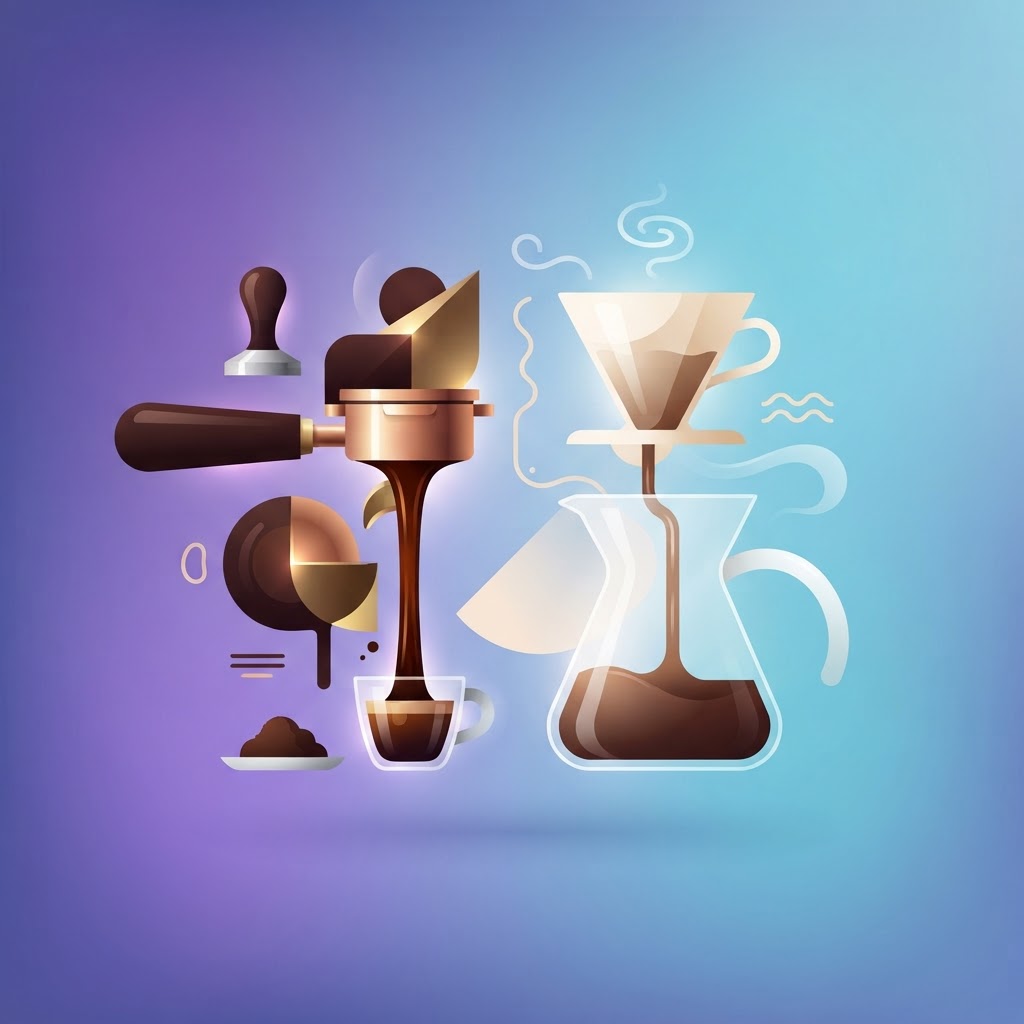
Espresso vs. Drip Coffee: Understanding the Difference for Home Espresso Enthusiasts
New to coffee brewing? Learn the core differences between espresso and drip coffee to help you choose the best setup for your home coffee ritual.
Key Takeaways
- Espresso uses high pressure to extract a concentrated shot, while drip coffee relies on gravity and slow percolation.
- Espresso requires a finer grind and specific equipment; drip coffee is more forgiving and accessible for large batches.
- Choosing the right equipment for home espresso can significantly elevate your morning routine.
- Understanding extraction variables like grind size, temperature, and brew time is the secret to a great cup.
Introduction
If you have ever stood in front of a wall of coffee gadgets, you know the struggle: should you invest in a drip machine or start your journey with home espresso? Both methods produce a delicious cup of caffeine, but the underlying science and the final sensory experience are drastically different. For the beginner, the term 'espresso' often feels intimidating, while drip coffee feels like a standard, everyday utility. However, mastering the nuances of each will change how you view your morning brew. At WebSpikes, we believe in the power of refined workflows—whether you are perfecting your marketing strategy or pulling the perfect shot of espresso, the right process always yields the best results.
The Science of Extraction
At its core, coffee brewing is a process of extraction—dissolving soluble compounds from coffee grounds into water. According to the Specialty Coffee Association (SCA), extraction is influenced by grind size, water temperature, and brew time.
Espresso is essentially a 'concentrated extract.' By forcing near-boiling water through a tightly packed 'puck' of finely ground coffee at high pressure (typically 9 bars), you pull out a rich, syrupy liquid topped with crema—an emulsion of coffee oils and carbon dioxide.
Drip coffee, or filter coffee, relies on gravity. Water flows through medium-to-coarse grounds at its own pace. This leads to a higher volume of liquid with a cleaner, lighter body compared to the bold, intense profile of an espresso.
Comparing Espresso and Drip Coffee
| Feature | Espresso | Drip Coffee | | :--- | :--- | :--- | | Brew Time | 25-30 seconds | 3-5 minutes | | Pressure | 9 bars (pump) | Atmospheric (gravity) | | Grind Size | Very Fine | Medium/Coarse | | Body | Thick, syrupy | Light, clear | | Typical Serving | 1-2 oz shot | 8-12 oz mug |
Why Start Your Journey with Home Espresso?
Stepping into the world of home espresso is more than just buying a machine; it is a commitment to the craft. Unlike drip machines that are largely 'set and forget,' espresso allows you to manipulate variables like the 'extraction yield'—the percentage of coffee grounds that end up in your cup.
For a beginner, the challenge is also the reward. Achieving that perfect 'mouse tail' flow from your portafilter and the rich golden crema on top of your shot feels like a victory. As you experiment with different beans and roast profiles, you become a student of the craft, much like how a digital marketer uses data from WebSpikes to optimize their campaign performance. Small tweaks in your grind size or tamp pressure lead to measurable differences in flavor, providing immediate feedback on your technique.
Choosing Your Gear
If you are ready to start with home espresso, consider these factors:
- The Grinder is King: Many beginners spend all their money on the machine and ignore the grinder. In espresso, the consistency of your grind is arguably more important than the espresso machine itself.
- The Machine Type: Decide between a manual lever, a semi-automatic (the gold standard for learning), or an automatic machine. Semi-automatics allow you to control the brew process, which is essential if you want to learn the art of extraction.
- Water Quality: Coffee is 98% water. Using filtered or bottled water prevents scale buildup and ensures the true flavor profile of your beans shines through.
FAQ Section
Q: Is espresso stronger than drip coffee? A: Espresso has a higher concentration of caffeine per ounce, but because a drip coffee serving is much larger, a single mug of drip coffee often contains more total caffeine than a single shot of espresso.
Q: Do I need expensive equipment for home espresso? A: While premium machines offer more stability, you can get excellent results with entry-level machines paired with a high-quality burr grinder.
Q: Can I use regular coffee beans for espresso? A: You can, but espresso is traditionally roasted slightly darker to balance the acidity and body, so look for 'espresso roast' or quality medium-dark roasts.
Conclusion
Whether you prefer the steady, reliable mug of drip coffee or the intense, focused ritual of home espresso, the best brewing method is the one that makes you happy. Remember, the journey is about consistency, quality ingredients, and constant learning. If you are looking to bring that same level of precision and optimization to your professional life, WebSpikes is here to help you automate and improve your workflows seamlessly. Happy brewing!