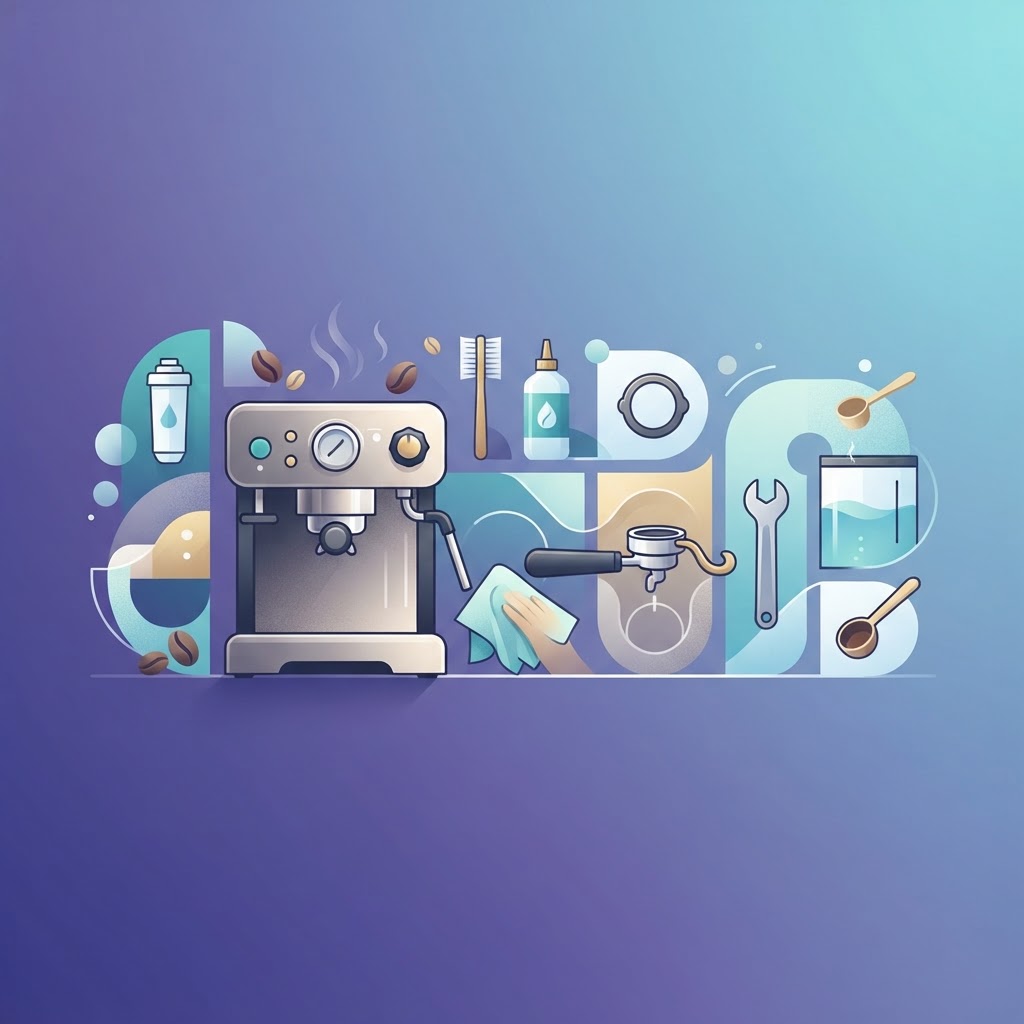
The Ultimate Espresso Machine Maintenance Schedule for Beginners
Master your home barista setup with this comprehensive espresso machine maintenance schedule to ensure perfect shots and a long-lasting machine.
Key Takeaways
- Daily backflushing and steam wand purging are mandatory to prevent rancid oil buildup.
- Descaling intervals depend on your local water hardness; always use a water softener or filtered water.
- Consistent maintenance extends your machine's lifespan by up to 10 years.
- Proper group head hygiene is the secret to café-quality flavor at home.
Investing in a high-quality espresso machine is just the beginning of your journey. To pull consistent, delicious shots, you must master the art of espresso machine maintenance. Much like optimizing a digital marketing campaign, your machine requires consistent, data-driven care to perform at its peak. Whether you are using a manual lever or an automatic pump system, neglecting routine upkeep leads to scale buildup, clogging, and the dreaded "sour" or "bitter" taste profile caused by rancid coffee oils. At WebSpikes, we believe in the power of fine-tuning your tools—and your espresso machine is the most critical tool in your kitchen.
Why Espresso Machine Maintenance Matters
Think of your espresso machine as a precision instrument. The internal components, particularly the solenoid valves and the group head, are susceptible to mineral deposits from water (scale) and accumulation of coffee fines. According to the Specialty Coffee Association (SCA), water quality is perhaps the most significant factor in coffee extraction, yet most beginners overlook the importance of regular filtration and descaling.
Without a structured maintenance schedule, the following issues will occur:
- Scale buildup: Restricts water flow and affects thermal stability.
- Rancid oil: Old coffee grounds leave a sticky film that ruins the flavor of fresh beans.
- Pump fatigue: Clogged screens force the pump to work harder, shortening the lifespan of your machine.
The Essential Espresso Machine Maintenance Schedule
Follow this table to ensure you never miss a vital service step.
| Frequency | Task | Why It Matters | | :--- | :--- | :--- | | Daily | Purge and Wipe Steam Wand | Prevents milk from drying inside the tip | | Daily | Backflush with Water | Removes fresh coffee oils from the screen | | Weekly | Chemical Backflush | Deep cleans the solenoid and shower screen | | Monthly | Descale (if hard water) | Removes mineral deposits from the boiler | | Quarterly | Replace Group Gasket | Prevents leaks and maintains pressure |
Deep Dive: Step-by-Step Maintenance
Daily Hygiene: The Purge
After steaming milk, immediately purge a burst of steam and wipe the wand with a damp microfiber cloth. Leaving milk residue on the wand is a health hazard and can clog the tiny air holes, resulting in weak steam pressure.
The Weekly Backflush
Backflushing is the process of using a blind filter basket to force water back through the machine's internal pathways. Add a small amount of specialty espresso machine detergent (like Cafiza) to your blind filter, run the pump for 5 seconds, and wait for the pressure to release. Repeat this five times, then run a plain water cycle to rinse thoroughly.
Managing Water Quality
Hard water is the enemy of any boiler. The U.S. Geological Survey (USGS) provides resources on water hardness levels, which vary by region. If your water exceeds 100ppm in mineral content, you must use a filtration pitcher or an in-tank softener. Neglecting this will cause a massive buildup of calcium carbonate, which can effectively "kill" your machine's boiler functionality over time.
Leveraging Your Maintenance Data
Much like tracking your content performance on the WebSpikes platform, you should track your maintenance intervals. Keep a physical log or a note on your phone regarding when you last descaled or replaced your group gasket. Consistency in documentation prevents you from "forgetting" the monthly tasks that eventually cause long-term repair costs.
FAQ: Espresso Machine Maintenance
Q: How often do I really need to descale? A: If you use filtered water, once every 3 months is standard. If you use tap water in a hard-water area, you may need to descale every 4 to 6 weeks.
Q: Can I use vinegar to descale my machine? A: Avoid it. Vinegar is difficult to rinse out and can leave a lingering acidic taste in your coffee. Always use an espresso-specific descaling solution.
Q: My shots taste sour, is it the machine or the beans? A: It is likely the beans or grind size, but if the group head screen is clogged, you might have uneven water flow causing channeling. Check your screen for debris.
Q: When should I replace the group head gasket? A: If you notice water leaking from the portafilter while pulling a shot, your gasket has likely hardened or cracked and needs replacement.
Conclusion
Prioritizing espresso machine maintenance is the mark of a true home barista. By committing to a regular cleaning schedule, you protect your investment and guarantee that your morning ritual remains a joy rather than a chore. Just as WebSpikes streamlines your marketing efforts by centralizing your data, keeping your machine clean ensures your workflow is smooth, efficient, and consistent. Happy brewing!