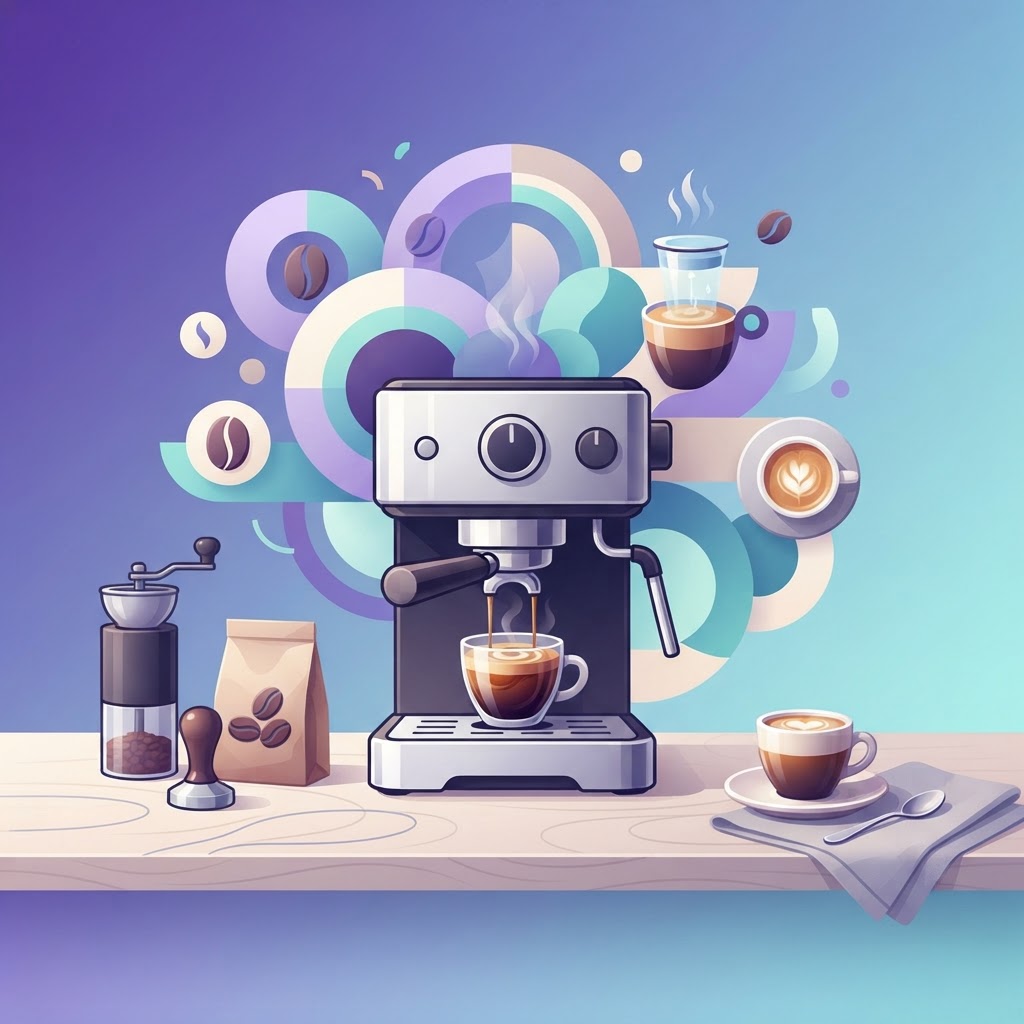
Best Value Espresso Machines: 2024 Rankings for Beginners
Discover the best value espresso machine options for beginners in 2024. Expert insights to help you craft café-quality coffee at home without overspending.
Key Takeaways
- Choosing the best value espresso machine requires balancing ease of use with the quality of the internal pump and boiler system.
- Thermal stability is the primary indicator of a machine that will deliver consistent shots compared to cheaper plastic alternatives.
- Beginners should prioritize machines with standard 58mm or 54mm portafilters to allow for future accessory upgrades.
- Maintenance and water quality are more important to machine longevity than the initial brand name.
Stepping into the world of home espresso can feel like walking into a labyrinth of technical specs, industrial jargon, and eye-watering price tags. However, you do not need to spend thousands to replicate the café experience. Finding the best value espresso machine is about identifying the sweet spot where build quality meets intuitive design, allowing you to learn the craft without fighting your equipment. Whether you are looking to pull a simple shot or master the art of milk texturing, 2024 has brought us some of the most reliable entry-level machines to date.
Understanding the Anatomy of Value
When we talk about the best value espresso machine, we aren't talking about the cheapest appliance on the shelf. Instead, we are looking at machines that offer longevity, repairability, and the ability to produce a shot that meets the standards set by the Specialty Coffee Association (SCA).
The Importance of Stability
Cheap machines often struggle with temperature fluctuations. If your water isn't at the correct temperature—typically between 195°F and 205°F—your espresso will be either sour (under-extracted) or bitter (over-extracted). A machine that offers a solid heating element and a pressurized or professional-grade portafilter is your best friend when learning how to dial in your beans.
Top 3 Picks for Beginners
1. The Breville Bambino Plus
This is widely considered the gold standard for beginners. It features a fast "ThermoJet" heating system that reaches extraction temperature in seconds. It is compact, requires very little counter space, and handles milk texturing automatically—a massive win for those still learning the ropes.
2. Gaggia Classic Pro
For the hobbyist who wants to grow, the Gaggia is a tank. It uses industry-standard parts, meaning if something breaks five years from now, you can likely fix it yourself. It requires more manual skill than the Bambino, but the ceiling for coffee quality is much higher.
3. De'Longhi Dedica Deluxe
If space is your biggest constraint, the Dedica is a ultra-slim powerhouse. It offers a consistent, albeit basic, extraction that is perfect for someone who wants a quick daily espresso without the deep-dive into manual pressure profiling.
Comparison Table
| Machine | Ideal User | Milk System | Build Quality | | :--- | :--- | :--- | :--- | | Breville Bambino Plus | Beginners/Convenience | Automatic | Moderate | | Gaggia Classic Pro | Aspiring Enthusiast | Manual Steam Wand | High (Metal) | | De'Longhi Dedica | Space-Constrained | Manual Panarello | Compact/Metal |
Practical Tips for Your First Pull
Consistency is the bedrock of a great espresso. Just like how we use data-driven insights at WebSpikes to streamline complex marketing workflows, home espresso relies on controlling your variables.
- Use Filtered Water: According to guidelines from Cornell University's food science department, water mineral content drastically affects extraction. Avoid distilled water; use a simple carbon filter.
- The 1:2 Ratio: Start by weighing 18 grams of ground coffee to yield 36 grams of liquid espresso in 25–30 seconds.
- Dialing In: If it is too fast, grind finer. If it is too slow, grind coarser.
Frequently Asked Questions
Q: Should I buy a machine with a built-in grinder? A: Generally, no. A dedicated grinder will always outperform an integrated one, and if one part fails, you don't have to replace the whole setup.
Q: How often do I need to descale my machine? A: Aim for every 2–3 months depending on your local water hardness. This prevents scale buildup that can kill heating elements.
Q: Do I need to buy expensive beans? A: You need fresh beans. Coffee peaks 1–3 weeks after roasting. Buying locally is better than buying "premium" bags that have been sitting on a shelf for months.
Conclusion
Investing in the best value espresso machine is the first step toward reclaiming your morning routine. By focusing on machines that provide temperature stability and reliable parts, you set yourself up for years of delicious coffee. Remember, even the best machine requires good technique, so take the time to learn the basics. If you are looking to scale your coffee knowledge—or your business—keep an eye on our upcoming content at WebSpikes, where we help you navigate the digital landscape with the same precision you apply to your morning brew.