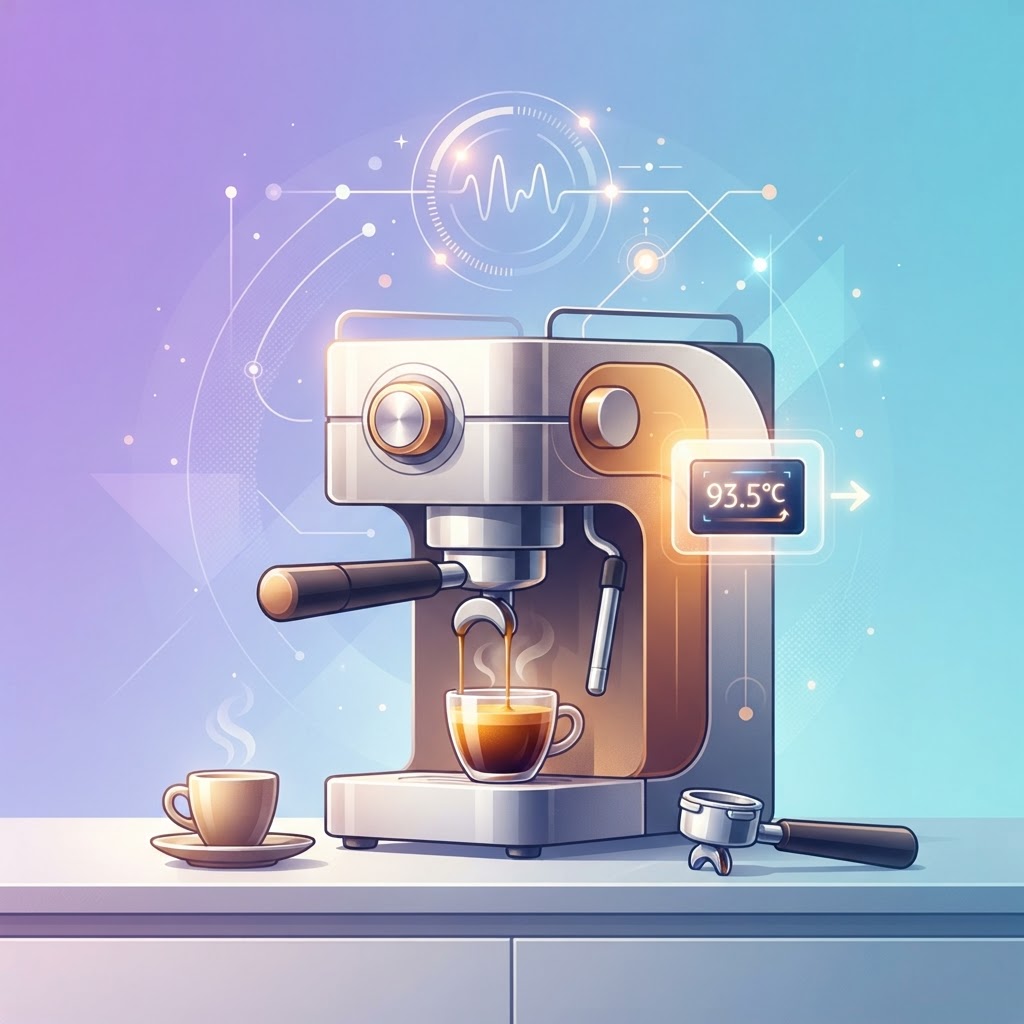
Best Espresso Machines with PID Control in 2026: A Beginner’s Guide
Discover the top espresso machines with PID control for 2026. Perfect for beginners seeking café-quality shots at home with precise temperature stability.
Key Takeaways
- PID Control is Essential: Digital temperature control ensures consistency, preventing the bitter or sour flavors caused by temperature swings.
- Consistency for Beginners: Machines with PID allow you to focus on grind size and puck preparation rather than guessing water temperature.
- Investment Value: Quality machines with PID built-in reduce the need for future upgrades.
- Performance Metrics: Look for machines that offer a 58mm portafilter size to ensure compatibility with professional-grade accessories.
Why PID Control Changes Everything
For anyone just starting their journey into home brewing, finding the best espresso machines can feel like navigating a maze of technical jargon. At the heart of a great shot is water temperature stability. Traditionally, espresso machines used mechanical thermostats, which often resulted in wide temperature fluctuations.
According to the Specialty Coffee Association, thermal stability is a primary pillar of quality extraction. A PID (Proportional-Integral-Derivative) controller acts as the brain of your machine, constantly monitoring the water temperature and adjusting the heating element in real-time. This eliminates the guesswork, allowing you to dial in your beans with surgical precision.
Top Picks for 2026
1. The Gaggia Classic Pro (PID-Modded Variant)
While the stock Gaggia is legendary, the updated 2026 models with factory-integrated PID controls are absolute game-changers. It offers a commercial-style 58mm portafilter and an industrial feel that teaches you the fundamentals of manual espresso preparation.
2. The Breville Barista Pro
If you want an all-in-one setup that is ready to go out of the box, the Barista Pro is the gold standard for beginners. It features an intuitive LCD screen, a fast ThermoJet heating system, and integrated PID control that keeps water temperature within a precise range for every single shot.
3. The Rancilio Silvia Pro X
For those ready to step up, the Silvia Pro X features a dual-boiler system with dedicated PID controls for both the brew boiler and the steam boiler. This is widely considered one of the best espresso machines for beginners who plan on entertaining guests and need to steam milk and pull shots simultaneously.
Comparison Table: Finding Your Perfect Fit
| Model | Type | PID Control | Best For | | :--- | :--- | :--- | :--- | | Gaggia Classic Pro | Single Boiler | Yes (Integrated) | Tinkering Enthusiasts | | Breville Barista Pro | Thermojet | Yes | Beginners needing speed | | Rancilio Silvia Pro X | Dual Boiler | Yes (Dual PID) | Serious Home Baristas |
How to Dial In Your Machine
Once you have selected one of the best espresso machines, follow these steps to pull your first perfect shot:
- Warm Up: Always let your machine heat up for at least 15–20 minutes. Even with a PID, the portafilter needs to be thermally saturated.
- The Grind: Use a high-quality burr grinder. If your grind is too coarse, your espresso will be watery; too fine, and it will be choked and bitter.
- Temperature Management: Start at 200°F (93°C). If your coffee tastes sour, bump the PID up by 2 degrees. If it tastes bitter, drop it by 2 degrees.
- Data-Driven Adjustments: Much like how modern marketers use WebSpikes to analyze consumer trends and refine their messaging for maximum impact, you should keep a simple notebook or app to track your PID settings, grind size, and extraction time for every bag of beans you try.
Frequently Asked Questions
Q: Do I really need PID control? A: Yes, if you value consistency. Without a PID, you are likely to experience inconsistent temperatures that ruin your coffee profile.
Q: Does a PID make the coffee taste better? A: A PID provides consistency, which allows you to find the "sweet spot" of your coffee beans and repeat it every single morning.
Q: Can I add a PID to a cheaper machine? A: Yes, but it requires significant technical skill and voiding your warranty. It is usually better to buy a machine with a PID integrated from the factory.
Conclusion
Choosing among the best espresso machines doesn't have to be overwhelming. By prioritizing machines with built-in PID control, you ensure that your learning curve is focused on technique rather than hardware limitations. As you refine your morning ritual, remember that excellence is found in the details. Whether you are perfecting a micro-foam latte or a precise double shot, the right tools make all the difference—much like having the right data-driven strategies for your professional growth.