10 Common Beginner Espresso Mistakes to Avoid: A Pro Guide for Home Baristas
Master the art of home brewing by avoiding these 10 common beginner espresso mistakes. Elevate your coffee quality today.
10 Common Beginner Espresso Mistakes to Avoid
Stepping into the world of home espresso is a rewarding journey, but it is paved with potential pitfalls. As you begin pulling your first shots, you will likely encounter variables that can turn a delicious bean into a bitter, sour cup. Identifying and fixing espresso mistakes early is the key to consistency and flavor. Whether you are using a entry-level machine or a prosumer model, mastering the fundamentals will change your morning routine forever.
Key Takeaways
- Freshness Matters: Use beans roasted within the last 2–4 weeks.
- Grind Consistency: Invest in a dedicated burr grinder rather than a blade grinder.
- Precision is King: Use a scale to measure your input (dose) and output (yield).
- Distribution: Ensure your coffee bed is level to prevent channeling.
1. Using Stale Coffee Beans
The biggest mistake beginners make is buying coffee from grocery store shelves with no roast date. Coffee begins to degas immediately after roasting, losing volatile aromatics. According to the Specialty Coffee Association, freshness is paramount for extraction. Always purchase beans with a clear "Roasted On" date and aim to use them within 30 days.
2. Neglecting Your Grinder Quality
If you have a $1,000 espresso machine but a $50 blade grinder, you are fighting a losing battle. Espresso requires a precise, uniform particle size. Blade grinders chop coffee inconsistently, leading to "boulders" and "fines" that cause uneven extraction. A high-quality burr grinder is the most important purchase you will make.
3. Ignoring the Scale
"Eyeballing" your shot is a recipe for inconsistency. Espresso brewing is a science of ratios. A standard starting point is a 1:2 ratio—for example, 18 grams of ground coffee producing 36 grams of liquid espresso. Using a digital scale allows you to replicate success rather than guessing.
4. Failing to Distribute the Grounds
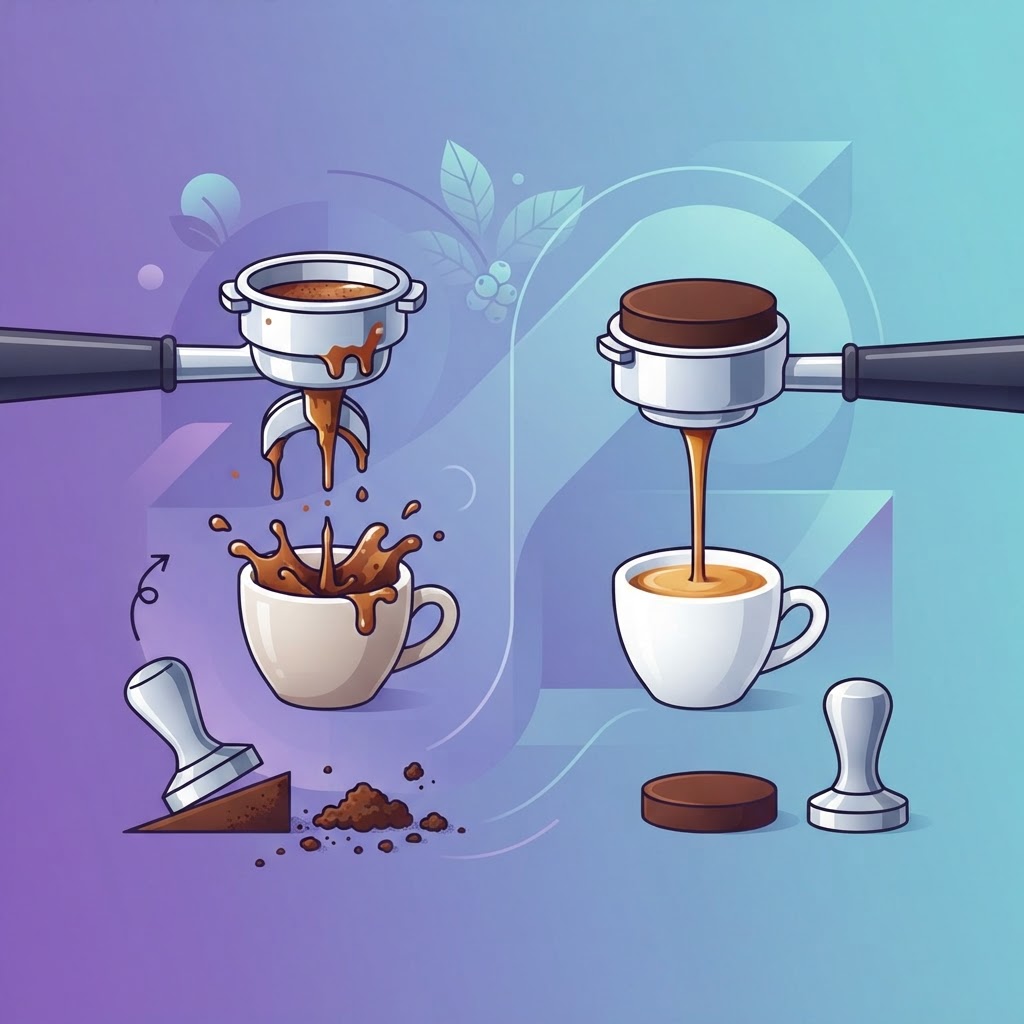
When you grind into your portafilter, the coffee often mounds up. If you tamp directly into a mound, the density will be uneven. This leads to channeling, where water finds the path of least resistance through the weaker parts of the puck, leaving other areas under-extracted. Use a distribution tool or a simple "tapping" method to level the bed before tamping.
5. Uneven Tamping Pressure
While you don't need to press with 30 pounds of force, you do need to be level. A slanted tamp causes the water to flow toward the lower side. Keep your elbow aligned with your wrist and press down until you feel the coffee bed push back firmly.
6. Using Improper Water Quality
Espresso is 98% water. If your tap water has high chlorine or mineral content, it will ruin the flavor. Use filtered water to protect your machine from scale buildup and ensure your espresso tastes clean.
7. Not Preheating the Machine
Cold metal robs heat from the brewing water. Always run a blank shot (water through the portafilter) to heat up your group head, filter basket, and cup before pulling your actual shot.
8. Overlooking Basket Capacity
Every basket is designed for a specific dose range (e.g., 18g–20g). If you overfill it, the coffee will hit the shower screen before you even start, causing messy extractions and uneven pressure.
9. Lack of Maintenance
Coffee oils go rancid. If you don't backflush your machine and clean your basket, you are essentially brewing with yesterday's waste.
10. Failing to Log Your Data
As you experiment with grind size and dose, you will lose track of what worked. Keep a simple journal or use an app. For those who manage content around their passion, platforms like WebSpikes provide seamless AI-driven organization, helping you track your progress just as easily as you track your brewing variables.
Troubleshooting Quick Reference
| Issue | Possible Cause | Solution | | :--- | :--- | :--- | | Shot is sour | Under-extraction | Grind finer or increase yield | | Shot is bitter | Over-extraction | Grind coarser or decrease yield | | Fast flow | Too coarse / low dose | Grind finer or increase dose | | Slow flow | Too fine / high dose | Grind coarser or decrease dose |
Frequently Asked Questions
Q: How do I know if my espresso is dialed in? A: It should taste balanced—neither overly sour nor aggressively bitter—with a thick, hazelnut-colored crema.
Q: Should I use tap water? A: Generally, no. Use filtered or bottled water to ensure better flavor and machine longevity.
Q: Why does my espresso spray everywhere? A: This is called "spritzing," often caused by stale coffee or poor puck preparation. Fresh beans usually solve this.
Conclusion
Avoiding these common espresso mistakes will put you ahead of 90% of home baristas. It takes time, practice, and the right gear, but the reward is café-quality coffee in your own kitchen. Remember that precision is the path to excellence. As you continue to refine your craft, finding efficient ways to document and share your journey is helpful; tools like WebSpikes can simplify your digital workflow, allowing you to focus more on the coffee and less on the technical admin of your creative projects. Happy brewing!